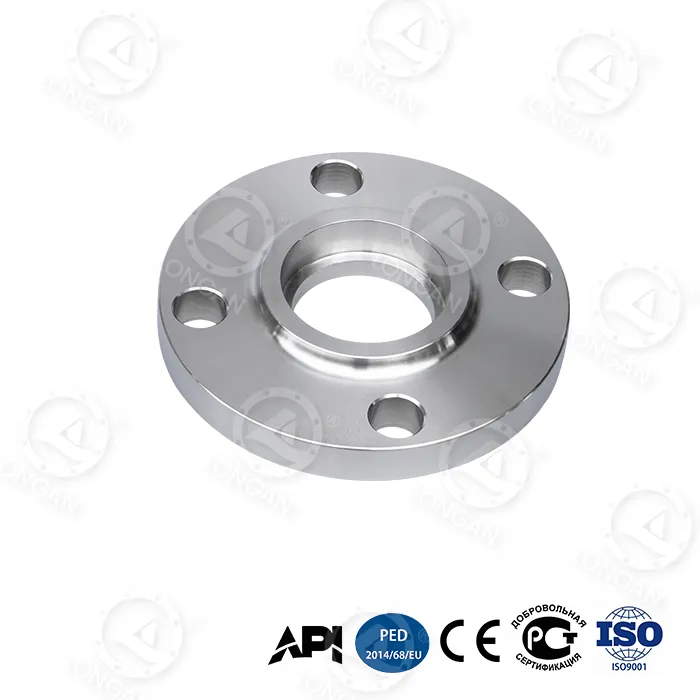
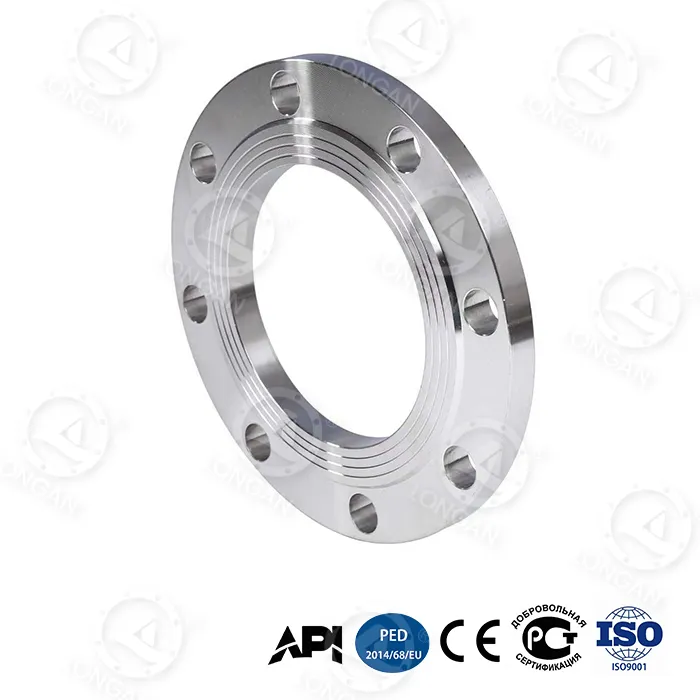
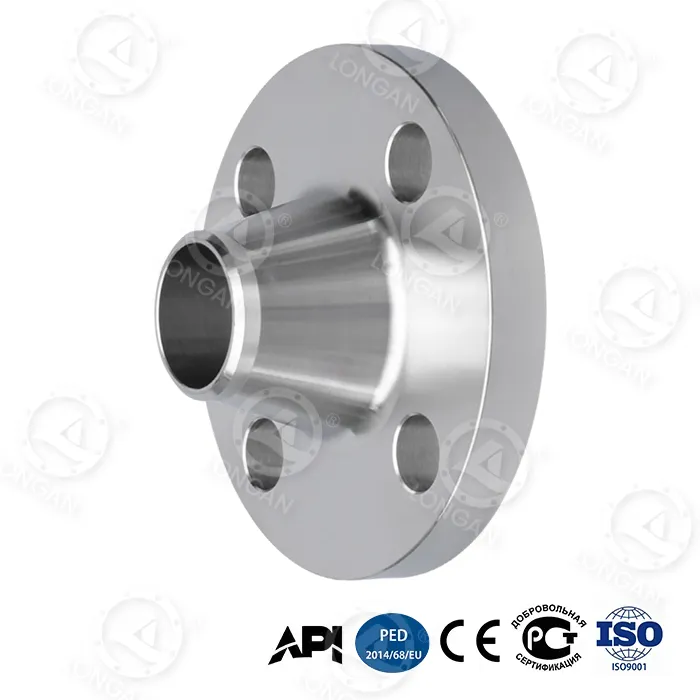
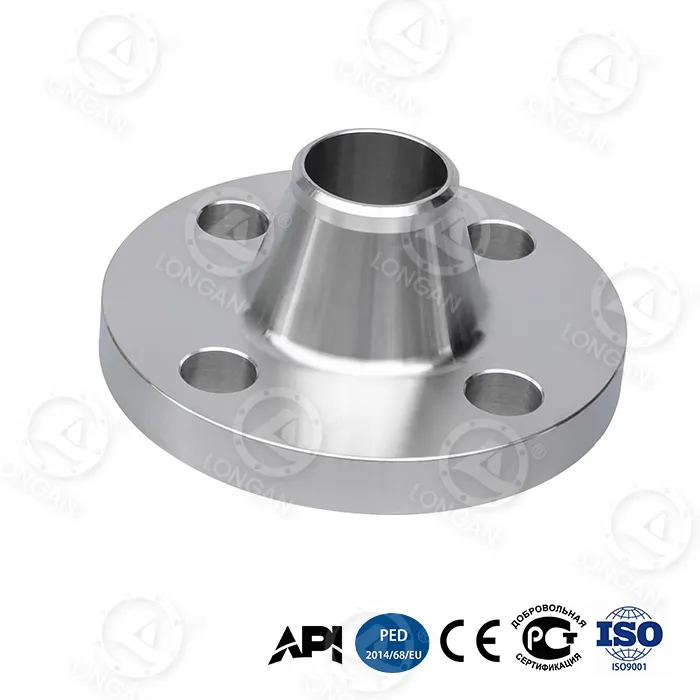
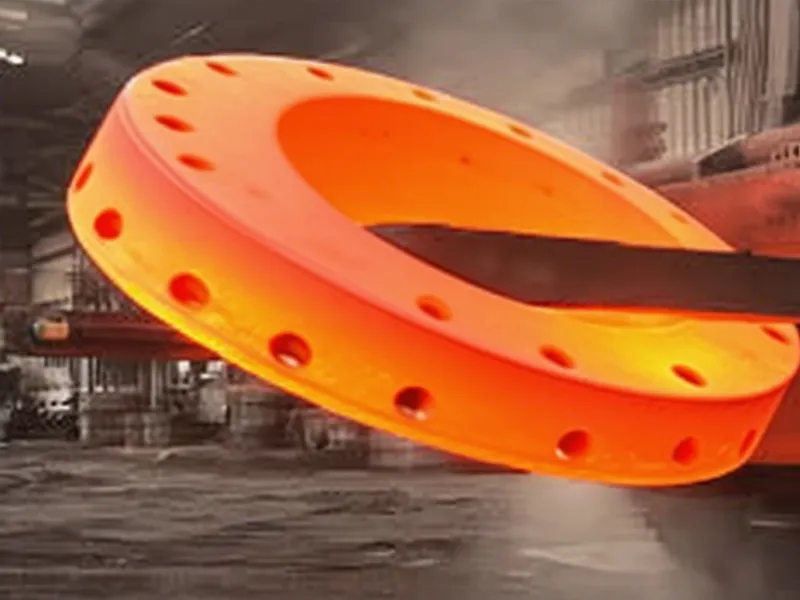
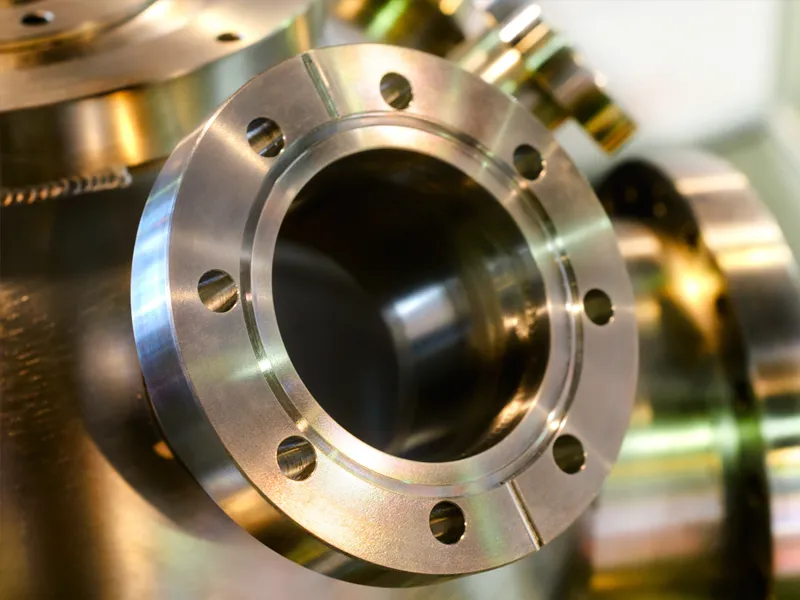
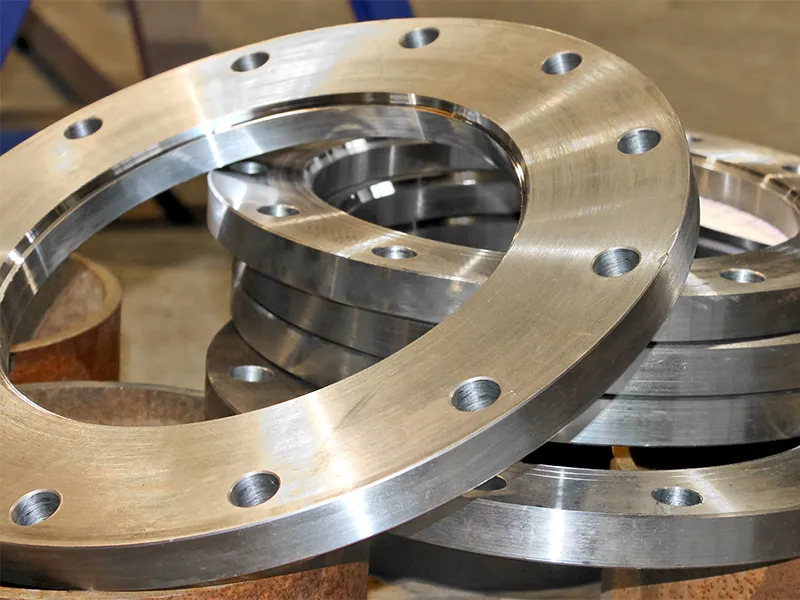
The flange manufacturing process typically includes the following steps:
Design: The flange's dimensions, shape, and connection method are designed based on the application requirements and standards. This design is typically performed using CAD software.
Material Preparation: Suitable materials, such as carbon steel, stainless steel, and aluminum alloy, are selected and cut and processed.
Stamping or Machining: According to the design drawings, the material is processed through stamping, cutting, forging, and other processes to form the flange shape.
Machining Holes: Holes are machined into the flange for bolt connections based on the connection requirements.
Surface Treatment: The flange undergoes surface treatment, such as polishing, galvanizing, and painting, to prevent corrosion and enhance the appearance.
Assembly: Components are assembled according to design requirements and secured with bolts.
Inspection and Testing: Completed flanges are inspected and tested to ensure they meet quality standards.
We use cookies to offer you a better browsing experience, analyze site traffic and personalize content. By using this site, you agree to our use of cookies.
Privacy Policy