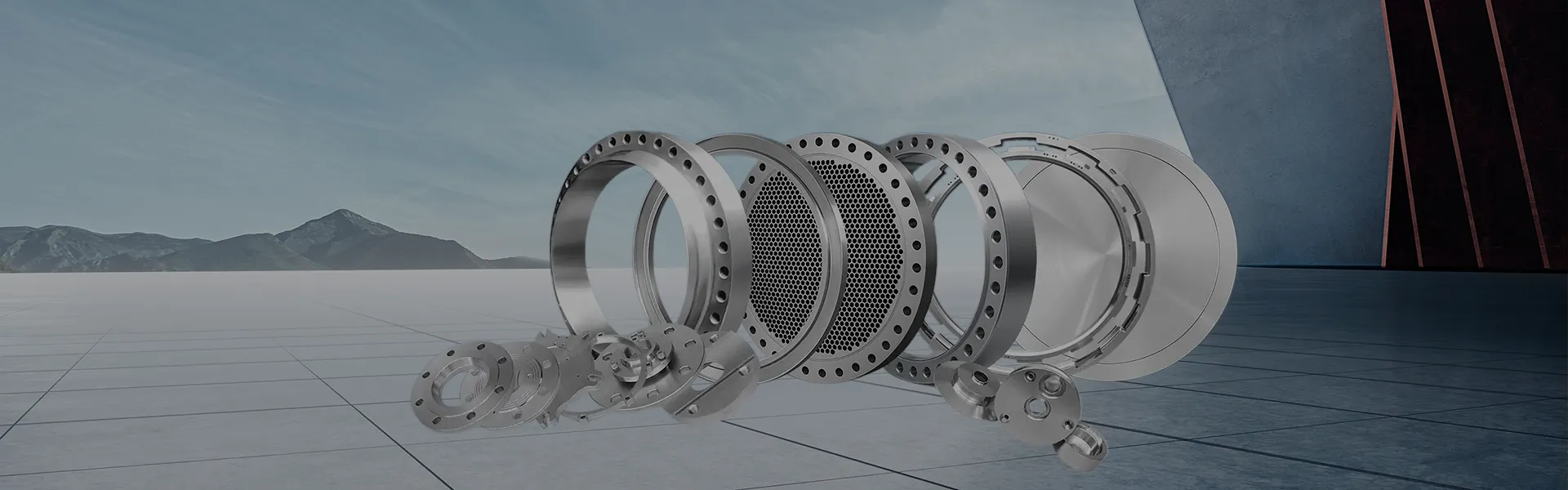
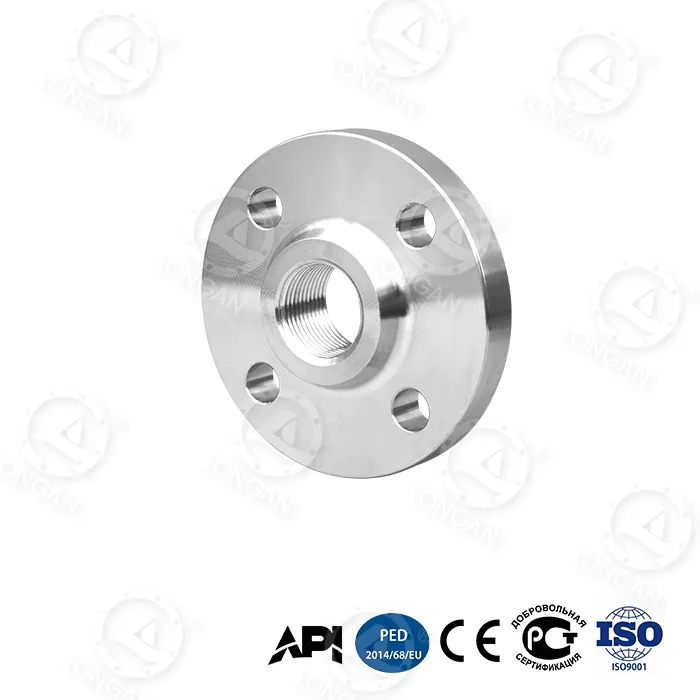
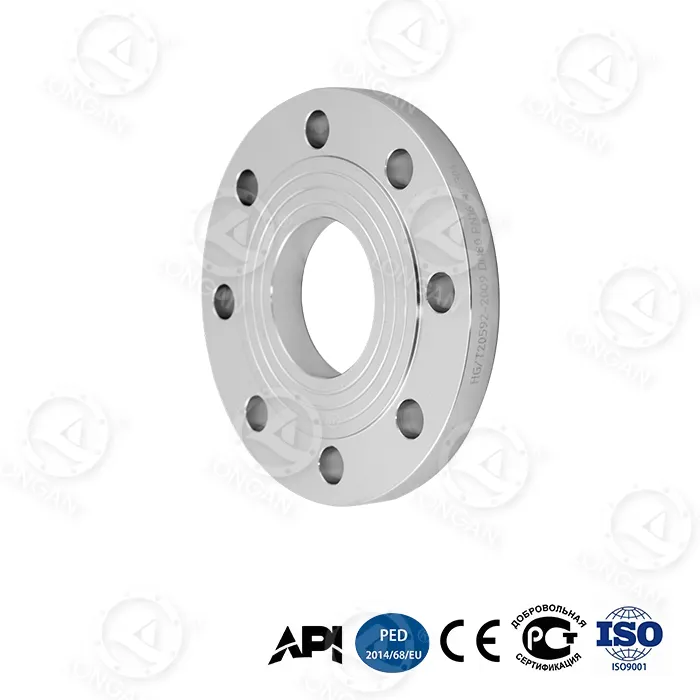
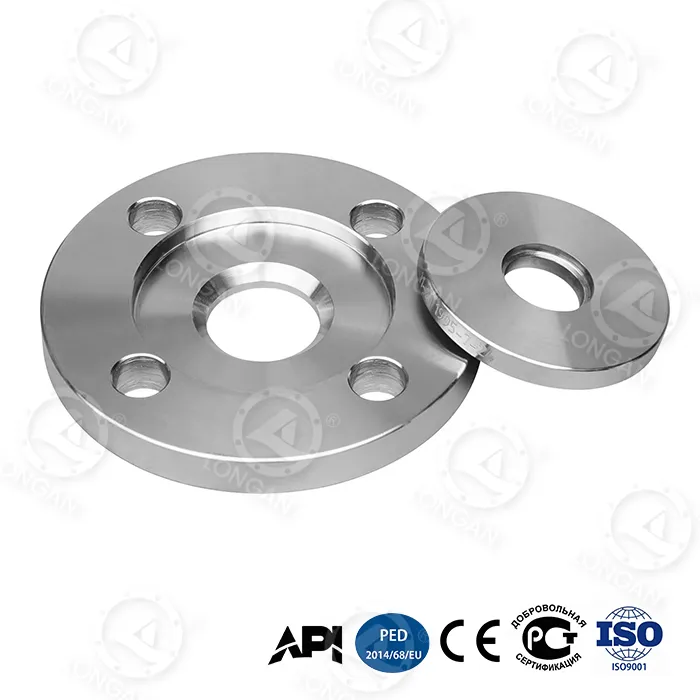
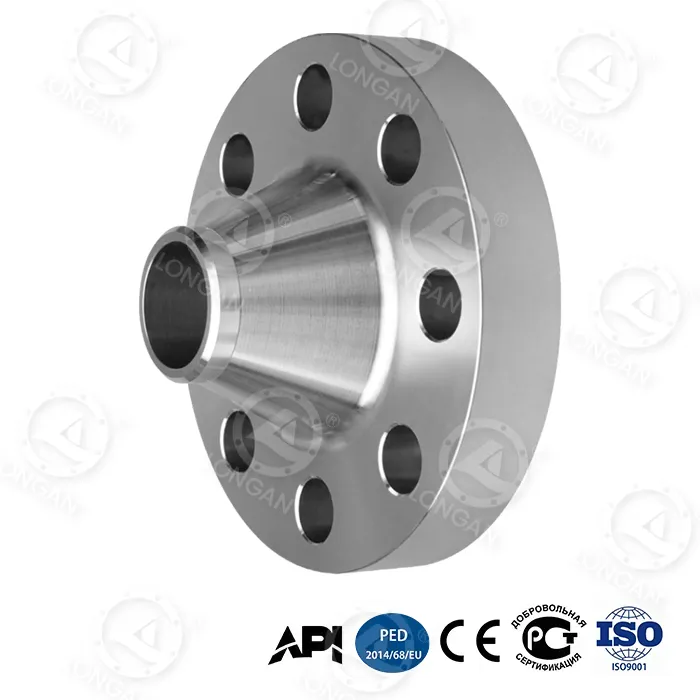
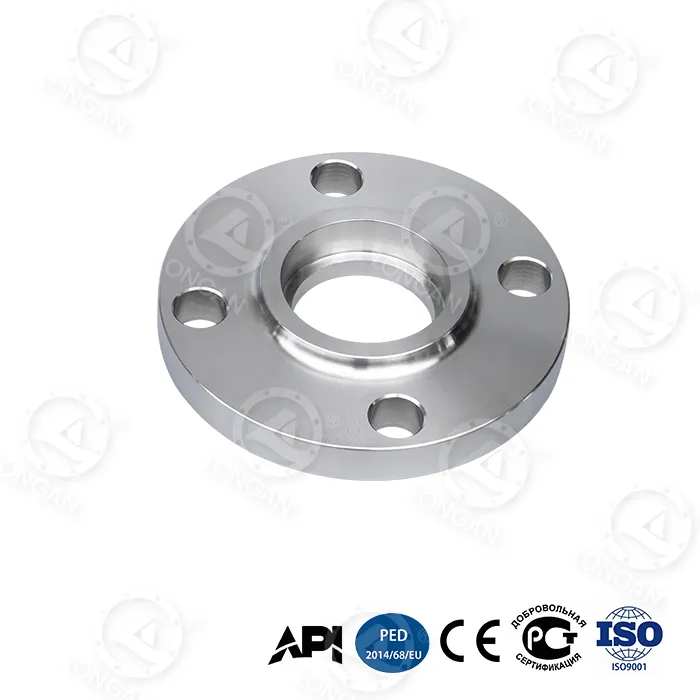
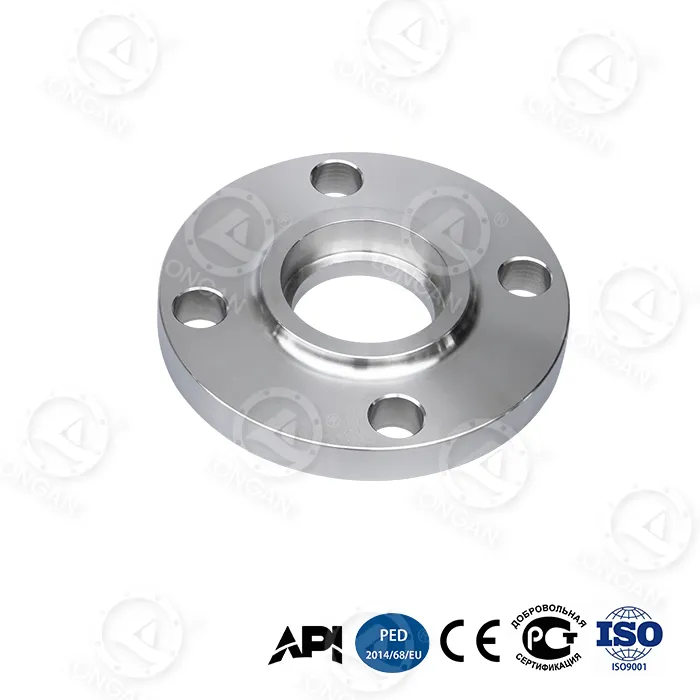
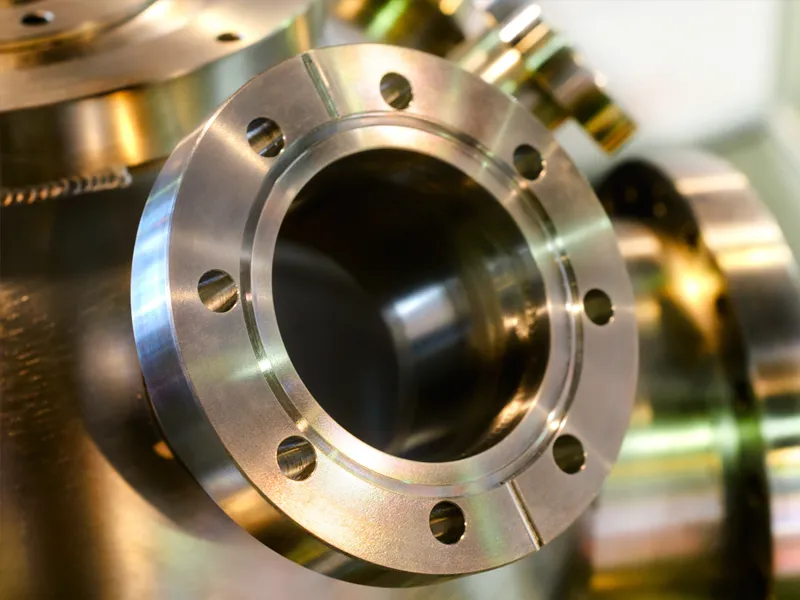
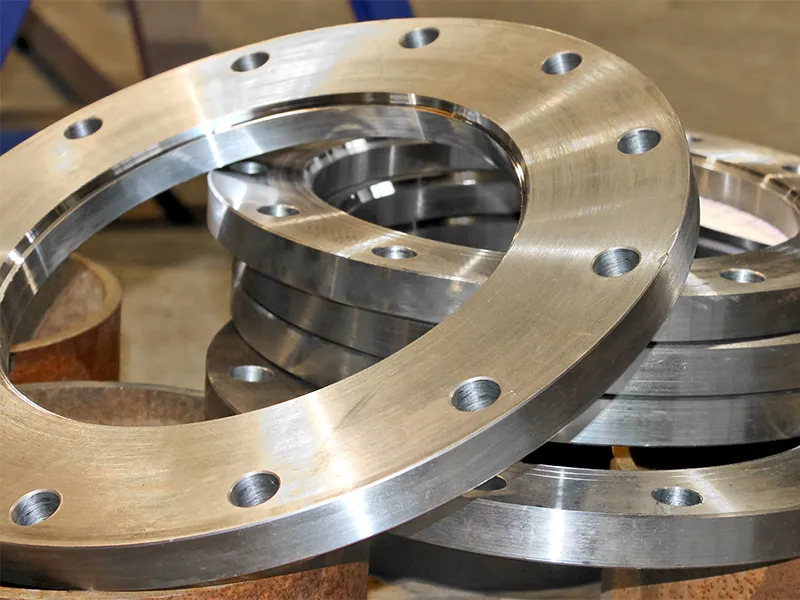
Need a class 150 socket weld flange supplier? Longan, a China factory with full in-house forging to testing, provides zero heat damage welding and micro-stress assembly (↓92% stress). Quality verified by paperless ERP. Used in TSMC 3nm, LH2 rockets, ITER. CE/ISO 9001/14001. OEM available.
Who Relies on This Component?
This class 150 socket weld flange is engineered for operations where a single leak means millions in losses or unacceptable safety risks. It is specified for:
- Oil & gas pipelines subject to thermal cycling and vibration.
- Petrochemical plants handling corrosive or high-purity media.
- Power generation facilities (including nuclear and fusion research).
- Large infrastructure projects requiring zero unplanned downtime.
- Semiconductor fabs needing ISO Class 1 cleanliness and sub-10⁻¹¹ helium leakage.
- Aerospace fueling systems and liquid hydrogen rocket test stands (-253°C).
If the application involves high assembly stress, intergranular corrosion risk, or microscopic leakage through conventional flanges, this product directly addresses those pain points.
What Makes It Superior? Three Core Advantages
Generic socket weld flanges rely on decades-old TIG welding and simple geometries. The class 150 socket weld flange delivers three measurable, field-validated advantages that no standard component can match.
Advantage 1 – Zero Heat Damage Welding
Traditional TIG welding inputs >120 J/mm, creating a wide heat-affected zone (>500 μm) prone to intergranular cracking. This product limits heat input to only 28 J/mm and narrows the HAZ to 80 μm. It passes ASTM G28 A method with double time zero failure — meaning no weld decay, no hidden crack initiation, and no risk of intergranular corrosion.
Advantage 2 – Micro-Stress Assembly
Conventional flanges transfer thermal displacement and vibration as stress directly into the pipeline (78 MPa typical). Using a multi-surface stress dispersion socket, this flange reduces assembly stress to just 6 MPa (↓92%). Thermal displacement compensation improves from 0.3 mm to 0.008 mm (↓97%). Vibration attenuation rises from 35% to 98%. Result: longer pipeline life and fewer maintenance events.
Advantage 3 – Nano-Sealing Interface Control
Standard flanges achieve less than 85% real contact between sealing surfaces, leaving microscopic leak paths. This product uses mirror polishing + ion beam shaping to reach Ra 0.05 μm surface roughness and >99.6% real contact rate. Helium leakage rate is ≤10⁻¹¹ mbar·L/s — ten times tighter than ITER vacuum chamber requirements (10⁻⁹). Surface adsorption energy is below 0.08 eV, meaning molecular-level contaminants cannot attach. It is self-cleaning at the atomic scale.
Why It Outperforms Other Socket Weld Flanges
Most competing products are manufactured to meet only basic dimensional standards. They do not control heat input during welding, they ignore micro-stress accumulation, and they have no nano-scale sealing control. The differences are not academic — they directly affect operational costs and failure rates.
Comparison point
Typical class 150 socket weld flange
This product
Performance gap
Intergranular corrosion risk
High (wide HAZ, uncontrolled heat)
Zero (ASTM G28 A double time pass)
Eliminates a common failure mode
Assembly stress (MPa)
78
6
92% lower stress → less fatigue
Helium leakage (mbar·L/s)
10⁻⁶ to 10⁻⁸
≤10⁻¹¹
1000x tighter sealing
Real contact rate (%)
<85
>99.6
Virtually no leak path
Surface adsorption energy (eV)
>0.5 (contaminants adhere)
<0.08 (rejects molecular attachment)
Self-cleaning interface
In practical terms: a conventional flange may require helium leak inspection for 4 hours per joint. This product reduces that to 8 minutes (↓96%). A traditional flange in a TSMC 3nm fab released >5,000 particles/m³·h; this product releases fewer than 20 particles/m³·h, meeting ISO Class 1 cleanliness and increasing annual output value by $120 million.
What Problems Does It Solve?
Engineering teams face six persistent issues with standard socket weld flanges. This product solves each one.
Problem 1: Intergranular corrosion after welding
Solution: Zero heat damage welding keeps HAZ narrow and grain boundaries intact. Verified by ASTM G28 A double time zero failure.
Problem 2: Leakage due to thermal expansion and contraction
Solution: Micro-stress assembly compensates for ΔT=300°C with only 0.008 mm displacement (↓97%), maintaining seal integrity.
Problem 3: Vibration loosening and fatigue cracking
Solution: Vibration transmission attenuation rate of 98% (↑180% vs traditional) protects the joint and adjacent piping.
Problem 4: Microscopic leak paths through rough sealing surfaces
Solution: Nano-sealing with Ra 0.05 μm finish and >99.6% real contact rate eliminates molecular-scale leak channels.
Problem 5: Particle contamination in ultra-clean processes
Solution: Surface adsorption energy <0.08 eV rejects molecular attachment — self-cleaning at the atomic level. Demonstrated in TSMC 3nm fabs.
Problem 6: Unpredictable field failures and costly emergency shutdowns
Solution: Digital traceability from raw material to finished dispatch, plus predictable performance data (helium rate, stress values, particle counts), allows condition-based maintenance rather than reactive repairs.
Why Choose Longan as the Manufacturing Partner?
Selecting a flange is not only about the product — it is about the system that guarantees consistent quality. Longan operates with full in-house capabilities: forging, machining, testing, and digital tracking under one roof. The workshop has complete network coverage via an advanced online ERP system. Paperless production captures accurate data from raw material entry to finished product dispatch, making every stage auditable.
Certifications include CE, ISO 9001 (Quality Management), and ISO 14001 (Environmental Management). For each shipment, test reports (ASTM G28 A, helium leak at 10⁻¹¹ scale, SEM surface analysis) are provided — not as optional extras but as standard documentation.
Unlike traders or assembly-only shops, Longan controls metallurgy, heat treatment, machining precision, and final non-destructive testing internally. This is why the same flange design that serves TSMC’s 3nm wafer fabs also meets ITER SDC-IC standards for fusion reactor first walls.
Operational & Logistical Facts
Minimum order quantity: For standard forged parts, none. For lengths exceeding 2 meters, 10 pieces minimum.
Lead time: 2 to 4 weeks, depending on complexity and current load.
OEM service: Available for non-standard configurations and special materials.
Packaging: Heavy units in reinforced wooden crates; smaller units in cardboard boxes — selected per size, weight, and transport distance.
Shipping: Truck or ocean freight, optimized per destination and timeline.
Payment: L/C, T/T, D/P.
What This Socket Weld Flange Delivers
- No intergranular corrosion (ASTM G28 A double time zero failure).
- Assembly stress of only 6 MPa (vs 78 MPa traditional).
- Helium leakage ≤10⁻¹¹ mbar·L/s — beyond ITER and semiconductor standards.
- Real contact rate >99.6% — near-perfect sealing interface.
- Self-cleaning surface (adsorption energy <0.08 eV).
- Full digital traceability from forging to dispatch.
- Proven in aerospace fuel filling, rocket LH2 lines, TSMC 3nm fabs, and fusion reactors.
For domestic pipeline projects and heavy-duty international applications in oil & gas, petrochemical, power generation, and large infrastructure, the measurable difference of this class 150 socket weld flange is in the data above — and in every flange that leaves the Longan workshop.
For inquiries about Socket Flange, Flat Flange, 304 Welding Flange or price list, please leave your email to us and we will be in touch within 24 hours.
We use cookies to offer you a better browsing experience, analyze site traffic and personalize content. By using this site, you agree to our use of cookies.
Privacy Policy