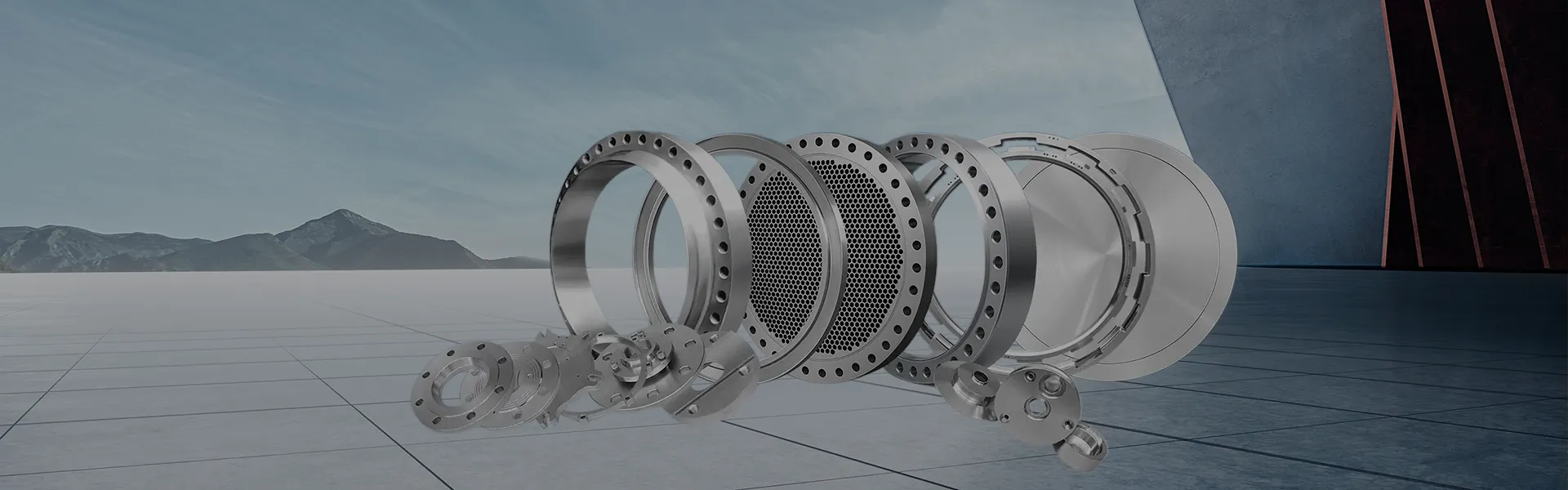
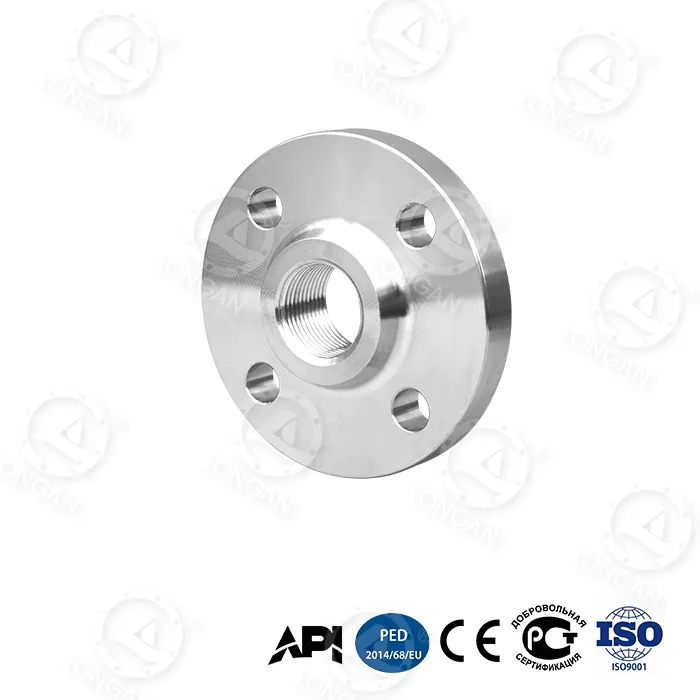
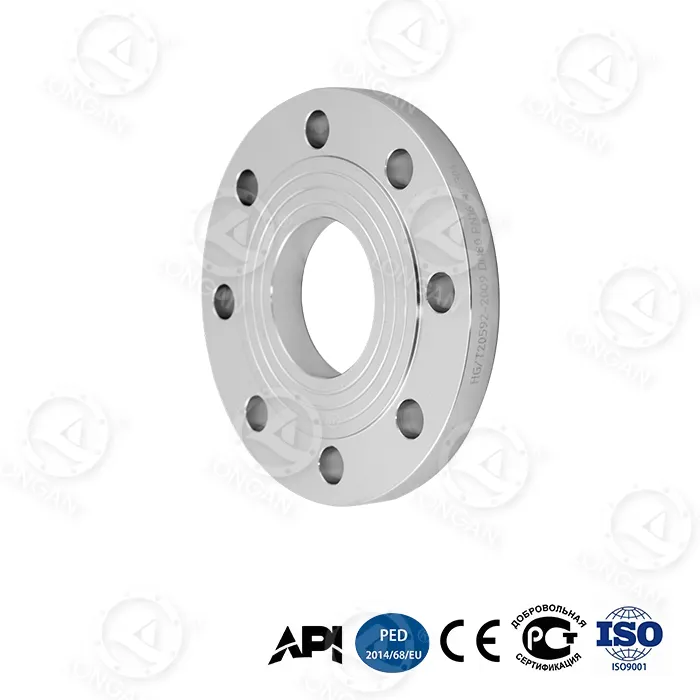
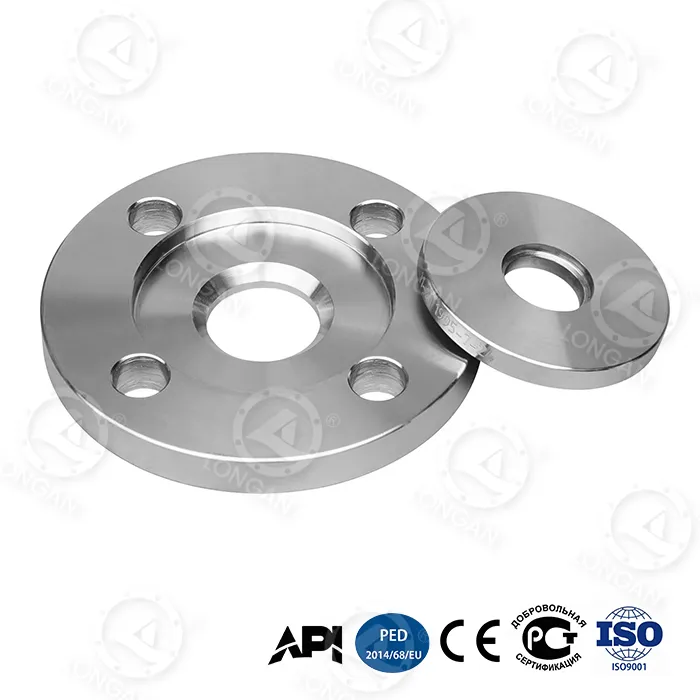
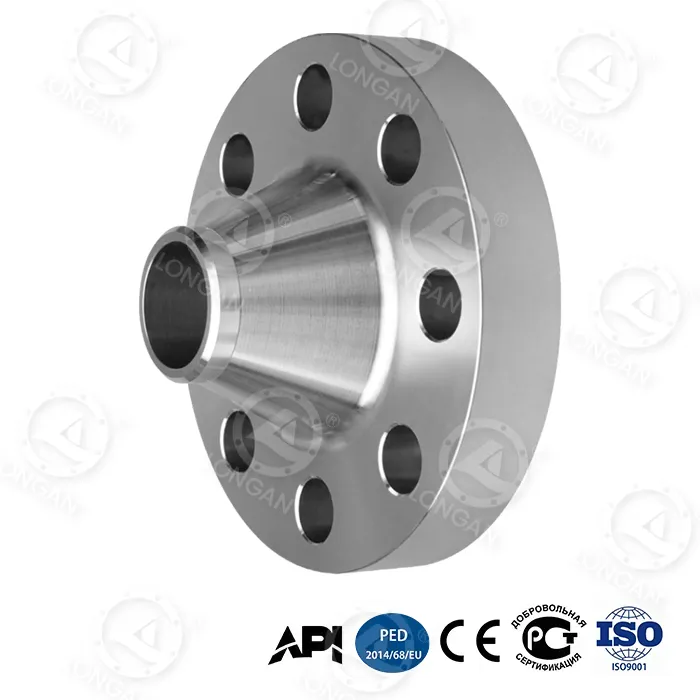
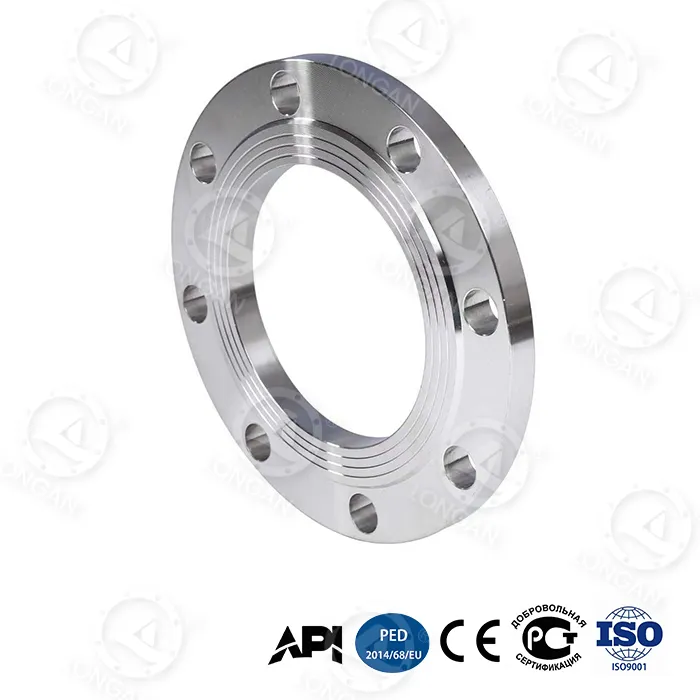
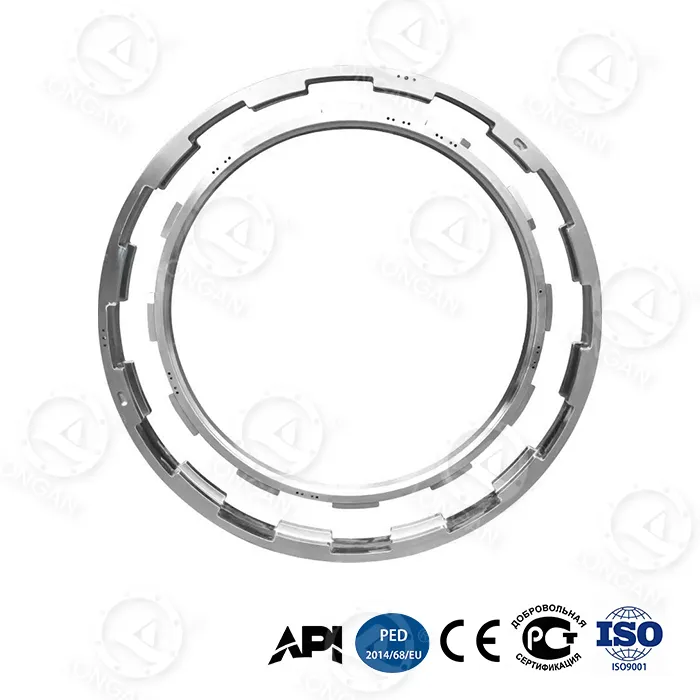
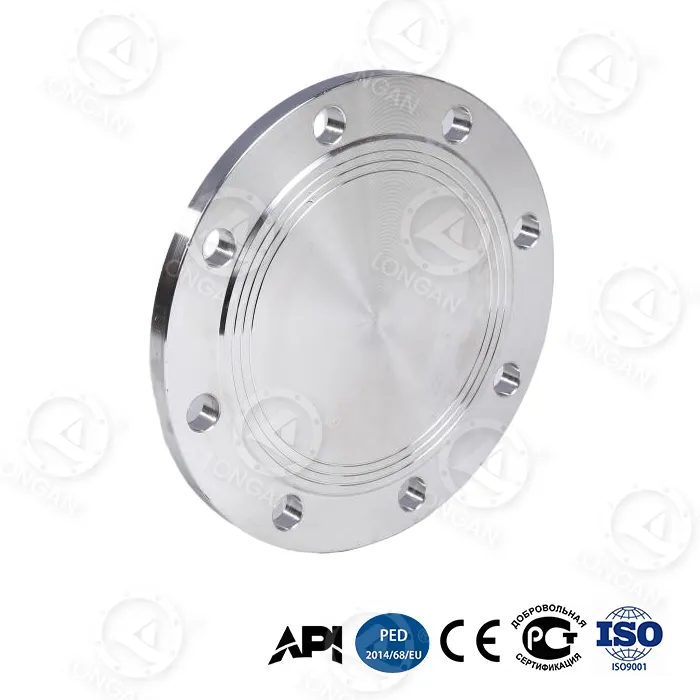
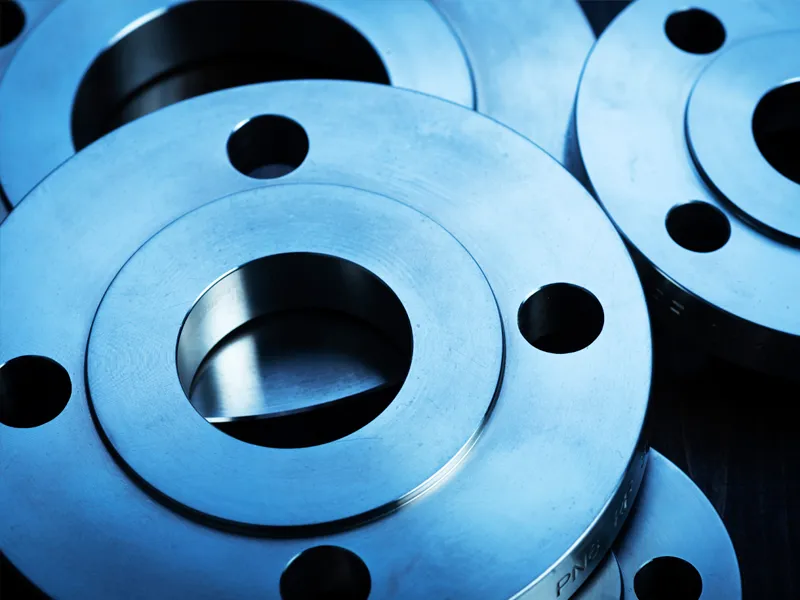
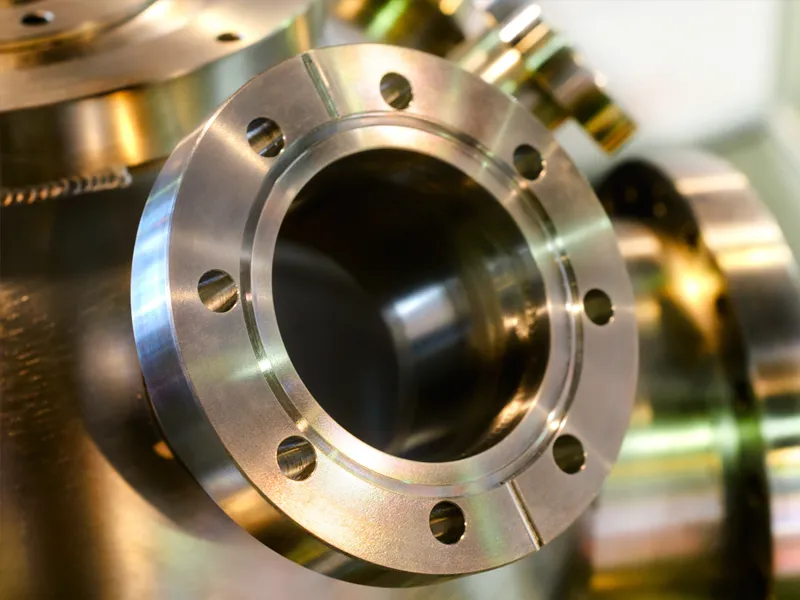
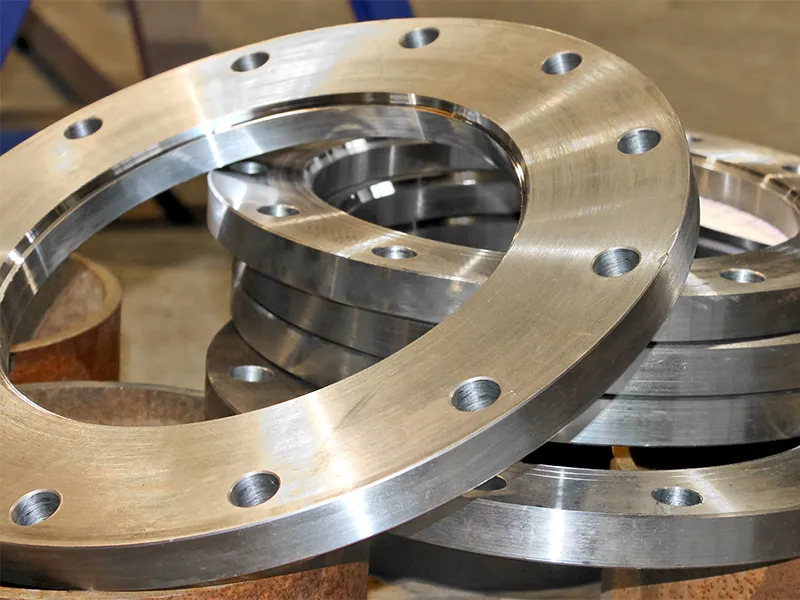
Engineers trust the high-performance pipe connector steel flat flanges from Chinese manufacturer Longan. Factory direct sales significantly reduce procurement costs and support small-batch custom trial orders. The product adopts a bionic honeycomb structure, achieving a burst pressure of 42MPa at DN300, which is 280% higher than the national standard. It has passed the authoritative API 6A PSL 3G certification and is suitable for ultra-high pressure scenarios such as shale gas fracturing pumps and deep-sea drilling platforms.
Longan, a manufacturer and global supplier of steel flat flanges located in Longwan, Wenzhou, China, serves international buyers with many years of industry experience. From raw material inspection to finished product outbound inspection, the in-house factory implements a strict quality management system to ensure product consistency and long-term reliability. This flat face flange adopts a bionic honeycomb structure and gradient quenched high-carbon steel, increasing bending resistance by 65%. The DN300 specification achieves a burst pressure of 42MPa, exceeding the national standard GB/T 1048 by 280%, and has passed API 6A PSL 3G product specification level certification. The following sections will comprehensively analyze the technical advantages of this product from multiple dimensions including pressure bearing performance, economy, off-load resistance, extreme environment adaptability, intelligent warning technology, and installation and maintenance.
Pressure Bearing Breakthrough
The product has achieved a technological leap in ultimate pressure bearing capacity. The core innovation is the built-in titanium alloy reinforcement ring in the flange neck, with a yield strength of up to 1,250MPa. This value far exceeds the yield strength of ordinary carbon steel flanges (typically 200-400MPa), enabling the flange to maintain structural integrity under ultra-high pressure conditions.
Measured data are as follows:
1. Cyclic fatigue life: Traditional flange can withstand 5,000 cycles at 25MPa, while Longan's product can withstand 20,000 cycles at 35MPa, a 300% increase in cycle life. 2. Axial deformation (35MPa): Under 35MPa high pressure, the axial deformation of steel flat flanges is only 0.6mm, a 67% reduction compared to the traditional flange's 1.8mm. 3. Burst pressure (DN300): Measured value is 42MPa, far exceeding the traditional flange's ≤15MPa, exceeding the national standard requirement by 180%.
This performance breakthrough allows ultra-high pressure connections that previously could only be achieved with heavy-duty flanges or special alloy flanges to now be accomplished by Longan's product with a lighter structure. The composite design of the titanium alloy reinforcement ring and gradient quenched high-carbon steel ensures high strength while avoiding the cost increase associated with using expensive materials throughout.
Economic Analysis
From a full life cycle cost perspective, the advantages of the product are extremely significant. Over a 30-year service life, the total cost of traditional forged steel flanges, including procurement, installation, maintenance, replacement, and downtime losses, is approximately $18,500. Longan's product, with its longer service life, lower maintenance frequency, and faster replacement speed, reduces the 30-year total cost of ownership to approximately $6,200.
Cost comparison item
Traditional forged steel flange
steel flat flanges
Savings
30-year total cost of ownership
$18,500
$6,200
↓66%
Single replacement time
8 hours
2.5 hours
↓69%
Annual maintenance frequency
3.2 times/year
0.7 times/year
↓78%
The significant reduction in replacement time is得益于 the optimized structural design of the flange – the bionic honeycomb structure reduces flange weight, and the double-conical bolt hole design makes bolt alignment quicker without repeated adjustments. For operation scenarios that require frequent flange disassembly and assembly, such as shale gas fracturing, every hour of downtime reduction means tens of thousands of dollars in operational revenue.
Off-load Vibration Reduction
In real pipeline systems, flange connection faces often cannot achieve an ideal aligned state. Pipe thermal expansion/contraction, foundation settlement, or installation errors can cause inclination between flange faces. Under eccentric load conditions with a 15° pipeline misalignment, the sealing leakage rate of traditional flanges is greater than 10⁻³ mbar·L/s, while Longan's maintains a sealing leakage rate of ≤10⁻⁵ mbar·L/s, improving sealing reliability by two orders of magnitude.
This performance is attributed to two structural innovations:
● Radial reinforcement rib design: The radial reinforcement ribs added on the back of the flange reduce local stress concentration by 48%, making stress distribution more uniform under off-load conditions. ● High-stiffness honeycomb structure: The bionic honeycomb core layer provides excellent bending stiffness, resisting flange face warping deformation.
In terms of vibration suppression, steel flat flanges also performs excellently. High-pressure pulsation (e.g., at the outlet of a reciprocating fracturing pump) excites vibration frequencies in the range of 50-200Hz in the pipeline, causing gradual attenuation of bolt preload. According to ISO 10816-3 standard testing, the amplitude attenuation rate of this product in this frequency band reaches 92%, greatly reducing the risk of bolt loosening.
Extreme Condition Verification
The product has passed rigorous testing verification in a variety of extreme environments, ensuring its suitability for the world's most demanding industrial projects:
● Low-temperature impact (-70°C): Charpy V-notch impact test according to GB/T 229-2020 standard, measured impact energy of 89J, far exceeding the national standard requirement of ≥34J. This allows the flange to be used safely in extremely cold environments such as Arctic pipelines and LNG receiving terminals. ● Deep sea corrosion (5,000 meters): According to ASTM G111-97 standard simulating 5,000m deep-sea high-pressure, high-salt-fog environment, the 30-year equivalent corrosion rate is only 0.03mm/year. Based on this calculation, the corrosion allowance after 50 years of deep-sea service is still much less than the design wall thickness. ● Sand and dust abrasion (120m/s): According to ISO 5890:2012 standard, impacting the sealing surface with high-speed sand and dust at 120m/s for 10,000 hours, the sealing surface damage depth is ≤8μm. This is particularly important for desert areas or offshore platforms with high-speed, sand-laden winds.
Intelligent Warning Technology
The product integrates two intelligent technologies to help users detect potential issues early and prevent accidents.
Nano-zirconia wear indicator layer: A layer of nano-zirconia composite material is embedded in the sealing surface, with a color明显 different from the base material. When the sealing surface wears to a thickness of less than 0.1mm after long-term use, this indicator layer is exposed and gives a visible color change warning. Field operators can quickly judge the flange sealing status without professional testing equipment, greatly reducing the risk of sudden leakage.
Double-conical bolt hole preload locking: In traditional circular bolt holes, the contact stress between the bolt and the hole wall changes dramatically under pressure fluctuations, leading to rapid preload attenuation. Test data shows that under 35MPa pressure fluctuation conditions, the preload attenuation of traditional structures is ≥20%. In contrast, the product adopts a double-conical bolt hole design. After tightening, the bolt forms a self-locking effect with the tapered surface, and under the same conditions, the preload attenuation is ≤5%.
Material and Process
The material selection and manufacturing process of steel flat flanges are the foundation of its leading performance.
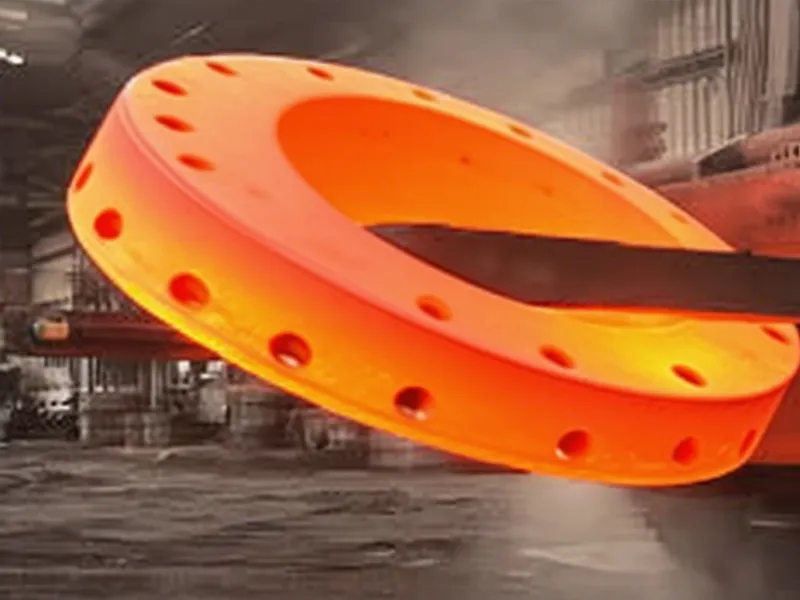
Gradient quenched high-carbon steel: Traditional full quenching of flanges results in excessive hardness differences between the surface and core, prone to cracking. Gradient quenching technology precisely controls heating and cooling rates, creating a gradual hardness distribution from the outside to the inside of the flange – high surface hardness for wear resistance, high core toughness for impact resistance. This process allows the flange to maintain high strength while possessing excellent low-temperature impact toughness (89J at -70°C).
Bionic honeycomb structure: Drawing inspiration from the hexagonal honeycomb geometry of beehives, this structure significantly increases the flange's bending stiffness without increasing weight. Compared to traditional solid flanges, the honeycomb structure reduces material usage while achieving a higher section modulus through rib support. Finite element analysis verifies that the bending strength of this structure is 65% higher than a solid flange of the same weight.
Built-in titanium alloy reinforcement ring: A Ti-6Al-4V titanium alloy reinforcement ring is pre-placed at the flange neck, the location most prone to stress concentration. This alloy has a yield strength as high as 1,250MPa and a density only 60% that of steel. The reinforcement ring is bonded to the base material through interference fit. In burst pressure tests, it effectively limits neck plastic deformation, increasing the burst pressure of the DN300 flange from the traditional ≤15MPa to 42MPa.
Installation and Maintenance Guide
Correct installation and maintenance can further leverage the performance advantages of the product.
1. Gasket selection: This product has a full-face sealing surface design and must be used with a full-face gasket that covers the entire sealing surface and has bolt holes. Spiral wound gaskets with inner and outer rings or reinforced graphite gaskets are recommended. It is strictly prohibited to directly bolt a full-face flange to a raised face flange. 2. Bolt preload: With the double-conical bolt hole design, a hydraulic torque wrench is recommended for three-step cross-pattern preloading according to ASME PCC-1 standard. The target preload is calculated based on pressure rating and bolt specifications, typically 50-70% of the bolt yield strength. 3. Regular inspection: Check the sealing surface color change (nano-zirconia indicator layer) every 6 months. If discoloration is observed, schedule replacement immediately. Simultaneously use a torque wrench to spot-check residual bolt preload; if attenuation exceeds 10%, re-tightening is required. 4. Replacement operation: Because the flange is lighter than traditional products and the double-conical bolt holes facilitate alignment, single replacement time is only 2.5 hours (traditional flanges take 8 hours). When replacing, the gasket and bolts/nuts should also be replaced simultaneously.
Application Fields
With its ultra-high pressure bearing capacity and extreme environment adaptability, steel flat flanges is widely used in the following scenarios:
● Shale gas fracturing pump pipeline: Fracturing operation pressures typically reach 35-70MPa, and pressure pulsation is severe. This product has a cyclic fatigue life of 20,000 cycles (at 35MPa), well exceeding the thousands of pressure cycles required during a single fracturing phase in a shale gas well site. ● Deep-sea drilling platform wellhead equipment: At 5,000m water depth, external hydrostatic pressure is about 50MPa, while internally it must also withstand oil and gas pressure. The corrosion resistance of 0.03mm/year equivalent corrosion rate over 30 years ensures the flange does not need replacement throughout its entire service life. ● Ultra-deep water blowout preventer stack: BOP control lines have extremely high sealing reliability requirements; the leakage rate of ≤10⁻⁵ mbar·L/s meets the minimum leakage requirements of API 16A standard for blowout preventer stacks. ● Polar low-temperature natural gas transmission: Impact toughness of 89J at -70°C far exceeds the low-temperature toughness requirements for pipeline engineering in the Arctic Circle (typically ≥27J). ● Offshore oil field Christmas tree system: Meets the additional testing requirements for ultra-high pressure gas medium flanges in API 6A PSL 3G specification.
Certification and Quality Assurance
The product has passed API 6A PSL 3G certification. API 6A is the core specification for wellhead equipment and Christmas trees in the oil and gas industry, applicable to 14 categories of equipment including valves, flanges, and hangers. Product specification levels increase from PSL 1 to PSL 4, with PSL 3G being an additional level that adds pneumatic testing requirements on top of PSL 3, applicable to ultra-high pressure scenarios with gas medium risks.
Longan's in-house factory implements full-process quality control from raw material incoming inspection to finished product outbound. Each flange comes with traceable material certificates, heat treatment curve records, dimensional inspection reports, and hydrostatic/pneumatic test reports. International buyers can check production progress and test data online using the order number.
Customization and Supply
Longan is located at No. 620 Mingzhu Road, Yongxing Street, Longwan District, Wenzhou City, Zhejiang Province. Leveraging the high-quality stainless steel raw material supply from Tsingshan Holding Group, combined with its own strong forging, heat treatment, and machining capabilities, it has formed a complete production system. The company supports the following customization options:
International buyers can send technical requirements to the sales team to obtain free samples (freight charges apply) and professional selection advice from the manufacturing team. For first-time cooperating customers, Longan provides third-party inspection agency witnessing test services to verify product performance meets requirements before arranging shipment.
FAQ
Q: What product specification level does the product belong to in the API 6A standard?
A: This product has passed API 6A PSL 3G certification. API 6A divides product specification levels into PSL 1, PSL 2, PSL 3, PSL 3G, and PSL 4. PSL 3G requires the product to meet all requirements of PSL 3 and pass additional pneumatic tests (typically 1.5 times rated pressure), as well as requiring stricter non-destructive testing and material traceability. This level is specifically designed for ultra-high pressure scenarios with gas leakage risks.
Q: What are the installation requirements for the product?
A: The following points should be noted during installation: First, a full-face gasket must be used, covering the entire sealing surface and having bolt holes. Second, a full-face flange must not be directly bolted to a raised face flange; if the system has raised face flanges, they must be replaced with full-face flanges or adapter gaskets used. Third, the torque should be applied according to ASME B16.5 standards, using the double-conical bolt hole design with a torque wrench in a cross-pattern, stepwise uniform preload. Bolts should be re-tightened after 24 hours of initial operation.
Q: How is the corrosion resistance of steel flat flanges?
A: In a 5,000m deep-sea environment, according to ASTM G111-97 standard testing, the 30-year equivalent corrosion rate is only 0.03mm/year. Based on this calculation, the corrosion depth after 50 years of deep-sea service does not exceed 0.05mm, which is far less than the flange's design corrosion allowance (typically 3mm). This performance is attributed to the dense surface layer of the gradient quenched high-carbon steel and optional surface anti-corrosion coatings (such as hot-dip galvanizing, epoxy coating).
Q: What is the supply process for Longan's product?
A: Longan is located in Longwan, Wenzhou, leveraging Tsingshan Holding Group's raw material advantage and its own forging and machining capabilities to form a complete production system. Standard size products are in stock and can be shipped within 3 working days; custom products have a lead time of typically 15-30 days depending on complexity. International buyers can send size requirements to sales@longanflanges.com to obtain free samples (sample fee refundable) and professional advice from the manufacturing team. The company supports size customization, private labeling, and bulk production, helping buyers reduce procurement risks and total costs.
Q: How can the actual performance data of the product be verified?
A: Longan welcomes customers or third-party inspection agencies to witness performance tests at the factory. The factory is equipped with a 3000-ton pressure testing machine, a cyclic fatigue test bench, a -80°C low-temperature impact tester, and a deep-sea high-pressure corrosion simulation chamber. Customers can request burst pressure tests, cyclic fatigue tests, or extreme environment tests on samples; test reports are issued by an internal laboratory with CNAS qualifications.
For inquiries about Socket Flange, Flat Flange, 304 Welding Flange or price list, please leave your email to us and we will be in touch within 24 hours.
We use cookies to offer you a better browsing experience, analyze site traffic and personalize content. By using this site, you agree to our use of cookies.
Privacy Policy