News

How Threaded Flange Serves Semiconductor High-Purity Lines?

2026-10-10 16:47:47

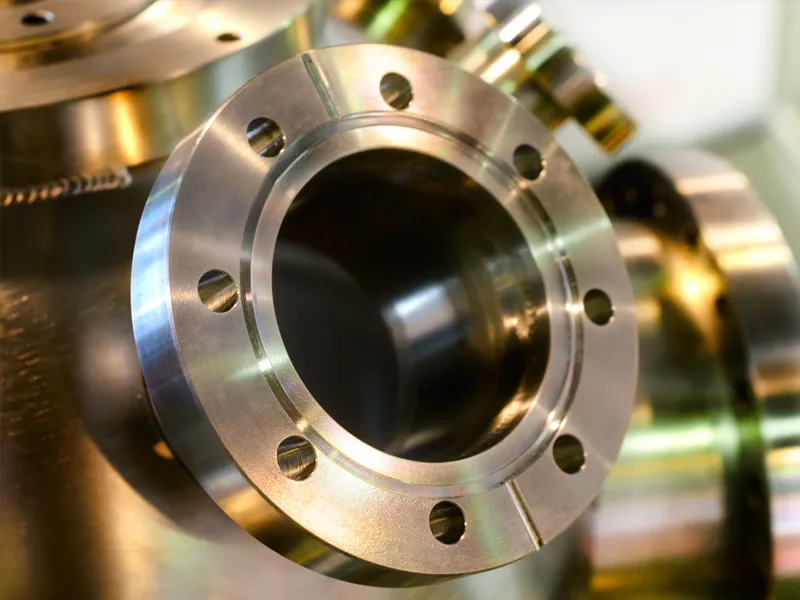
In a semiconductor fabrication facility, the purity of the gases and chemicals used in the manufacturing process is measured in parts per trillion. A single particle of dust, a trace of moisture, or a microscopic leak can ruin an entire batch of wafers. The piping systems that transport these ultra-pure gases and chemicals are among the most demanding in any industry. Every component—every valve, every fitting, every flange—must meet exacting standards for cleanliness, material purity, and leak-tightness. The Threaded Flange is one of the critical components in these high-purity lines. It provides a means of connecting pipes, valves, and equipment while maintaining the integrity of the ultra-pure environment.


The question of how a Threaded Flange serves semiconductor high-purity lines is a question of design, material, and manufacturing precision. The flange must be made from high-purity stainless steel, typically 316L or 316L VAR, which resists corrosion and minimizes outgassing. It must have a smooth, passive surface finish that prevents particle adhesion and promotes cleanability. It must be machined to precise tolerances to ensure a leak-tight seal. And it must be thoroughly cleaned and packaged to prevent contamination during installation. This article will examine the role of the Threaded Flange in semiconductor high-purity lines, covering the material requirements, the design features, the manufacturing processes, and the quality control measures that ensure performance. We will also provide detailed specifications for our Threaded Flanges from our factory at Wenzhou Longan Flange Co., Ltd.

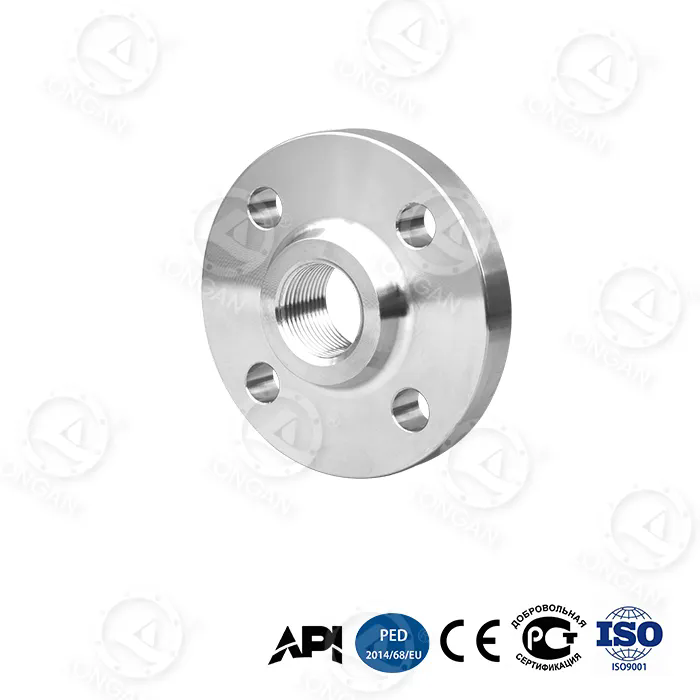
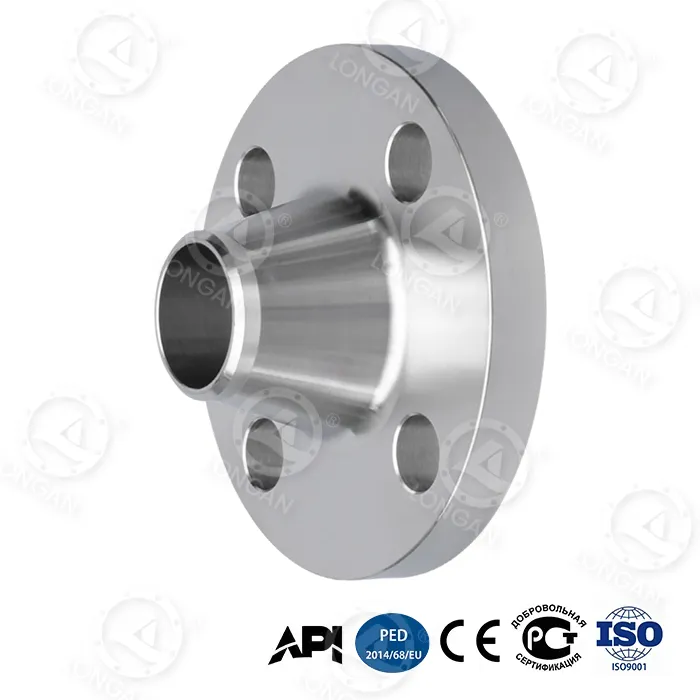
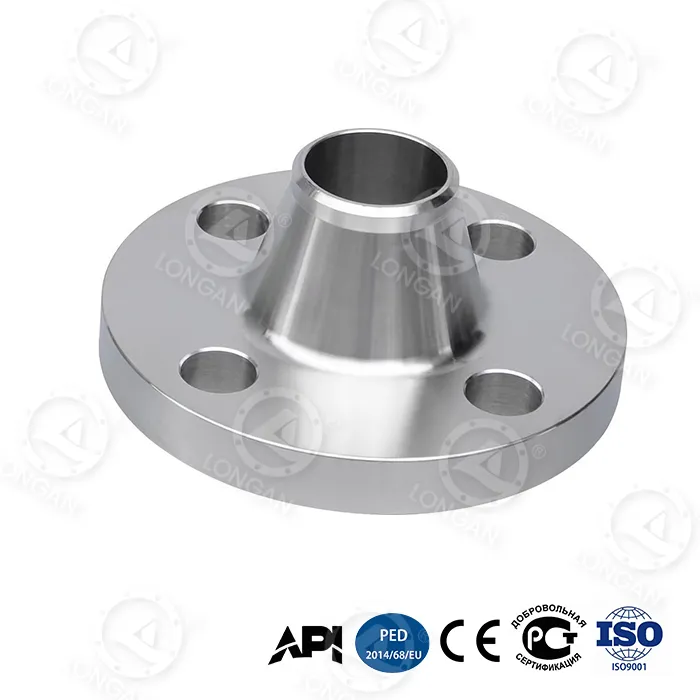
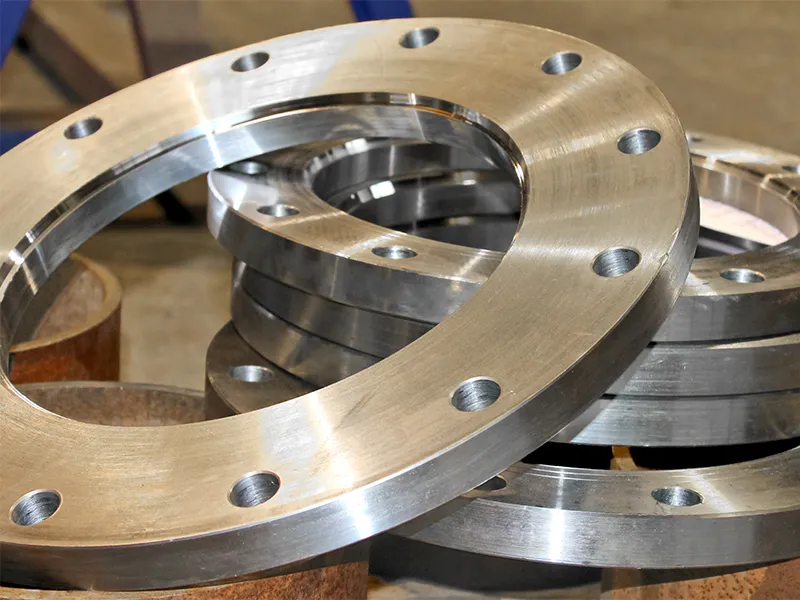
Class 150 Threaded Flange


Table of Contents


1. What Is a Threaded Flange and Where Is It Used in Semiconductor Facilities?

A Threaded Flange is a type of flange that is attached to a pipe by means of a threaded connection. The flange has a threaded bore that matches the external threads on the pipe end. The flange is screwed onto the pipe and then typically secured with a seal weld or a back weld to prevent leakage and to provide structural integrity. Threaded flanges are used in a variety of piping systems, but they are particularly valuable in semiconductor facilities because they allow for easy assembly and disassembly in tight spaces. Unlike welded flanges, which require welding equipment and skilled welders, threaded flanges can be installed with simple tools. This makes them ideal for applications where space is limited or where the piping system may need to be modified. The table below summarizes the common applications of threaded flanges in semiconductor facilities.

Application Description Key Requirements
Bulk Gas Delivery Transport of nitrogen, argon, hydrogen, and oxygen High purity, leak-tightness
Specialty Gas Lines Transport of silane, ammonia, and other process gases Corrosion resistance, cleanliness
Chemical Delivery Transport of acids, bases, and solvents Chemical compatibility, high purity
Exhaust Lines Transport of waste gases from process tools Corrosion resistance, leak-tightness
Cooling Water Lines Transport of cooling water for equipment Corrosion resistance, reliability

At Wenzhou Longan Flange Co., Ltd., our factory specializes in the manufacture of high-purity Threaded Flanges for the semiconductor industry. We have extensive experience in producing flanges that meet the stringent requirements of this demanding market. Our engineering team works closely with our customers to understand their specific requirements and to provide the optimal flange solution.


2. Why Does Material Purity Matter for High-Purity Gas Lines?

The purity of the material used in a Threaded Flange is critical for maintaining the purity of the gas or chemical flowing through the line. Even trace amounts of impurities in the metal can leach into the process stream, contaminating the product and reducing yield. The most common material for high-purity semiconductor flanges is 316L stainless steel, which contains low carbon and molybdenum for improved corrosion resistance. For even higher purity requirements, 316L VAR (vacuum arc remelted) steel is used. VAR steel has lower levels of inclusions and trace elements, making it cleaner and more resistant to outgassing. The table below compares the composition and properties of standard 316L and 316L VAR stainless steel.

Element / Property 316L Stainless Steel 316L VAR Stainless Steel
Carbon (C) max 0.03% 0.03%
Chromium (Cr) 16 - 18% 16 - 18%
Nickel (Ni) 10 - 14% 10 - 14%
Molybdenum (Mo) 2 - 3% 2 - 3%
Inclusions Standard levels Very low
Outgassing Rate Standard Low
Corrosion Resistance Good Excellent
Cost Lower Higher

At our factory, we source our raw materials from certified suppliers who specialize in high-purity stainless steel. We verify the composition of every batch of steel using spectroscopic analysis to ensure that it meets our specifications. We also perform additional cleaning and passivation steps to remove any surface contamination. Our goal is to provide Threaded Flanges that are as pure as the lines they serve.


3. How Does Surface Finish Affect Cleanability and Particle Control?

The surface finish of a Threaded Flange is a critical factor in semiconductor high-purity applications. A rough surface can trap particles, moisture, and microorganisms, which can then be released into the process stream. A smooth surface, on the other hand, is easier to clean and less likely to harbor contaminants. The surface finish is typically measured in Ra (arithmetic average roughness) or RMS (root mean square roughness). For semiconductor applications, the surface finish should be Ra 0.4 µm or better. For the most critical applications, such as ultra-high-purity gas lines, a surface finish of Ra 0.25 µm or better may be required. The table below summarizes the surface finish requirements for different semiconductor applications.

Application Surface Finish (Ra) Cleaning Method Typical Use
General High Purity 0.4 µm Mechanical polishing Bulk gas lines
Ultra-High Purity 0.25 µm Electropolishing Specialty gas lines
Critical Process 0.13 µm Electropolishing + passivation Process gas lines
Chemical Delivery 0.25 - 0.4 µm Electropolishing Acid and solvent lines

At Wenzhou Longan Flange Co., Ltd., our factory uses advanced machining and polishing techniques to achieve the required surface finish. We use CNC lathes with diamond tooling to produce a smooth surface on the flange face and bore. For higher purity requirements, we offer electropolishing, which removes a thin layer of material from the surface and produces a mirror-like finish. Electropolishing also enhances the corrosion resistance of the stainless steel by enriching the chromium content at the surface. Our quality control team measures the surface finish of every flange using a profilometer to ensure that it meets the specified requirements.


4. What Design Features Ensure a Leak-Tight Seal?

A leak-tight seal is essential for any component in a semiconductor high-purity line. Even a microscopic leak can allow moisture or oxygen to enter the system, contaminating the process gas and reducing yield. The Threaded Flange must be designed to provide a reliable seal under the operating pressure and temperature of the system. The key design features that ensure a leak-tight seal are the flange face design, the gasket, and the thread design. The flange face is typically a raised face or a flat face with a concentric groove. The gasket is typically a metal or elastomer ring that is compressed between the flange faces. The thread design is typically a tapered or parallel thread that provides a tight fit between the flange and the pipe. The table below summarizes the design features and their functions.

Design Feature Function Typical Specification
Flange Face Provides sealing surface Raised face, flat face, or grooved
Gasket Compressed between faces to seal Metal or elastomer ring
Thread Connects flange to pipe NPT, BSPT, or metric parallel
Seal Weld Provides primary seal and structural integrity Full penetration weld
Bolt Holes Compress the gasket Precise spacing and diameter

At our factory, we design our Threaded Flanges to provide a leak-tight seal in the most demanding semiconductor applications. We use precision machining to ensure that the flange face is flat and parallel, and that the bolt holes are correctly positioned. We also offer a range of gasket options to suit different process requirements. Our quality control team pressure-tests every flange assembly to verify its leak-tightness before it is shipped.


5. How Are Threaded Flanges Cleaned and Packaged for Semiconductor Use?

The cleaning and packaging of a Threaded Flange for semiconductor use are as important as the design and manufacturing. A flange that is perfectly manufactured can still contaminate the process line if it is not properly cleaned and packaged. The cleaning process for semiconductor-grade flanges typically involves several steps: degreasing, pickling, passivation, and rinsing with ultra-pure water. Degreasing removes oils and greases from machining operations. Pickling removes scale and oxide layers. Passivation enhances the chromium oxide layer on the surface, which improves corrosion resistance. Rinsing with ultra-pure water removes any remaining contaminants. The cleaned flange is then dried and packaged in a cleanroom environment. The table below summarizes the cleaning and packaging process.

Step Purpose Typical Method
Degreasing Remove oils and greases Solvent or alkaline cleaning
Pickling Remove scale and oxide Acid bath (nitric + hydrofluoric)
Passivation Enhance chromium oxide layer Nitric acid bath
Rinsing Remove acid residues Ultra-pure water (18 MΩ·cm)
Drying Remove moisture Nitrogen blow dry or vacuum dry
Packaging Prevent contamination during transport Cleanroom bagging (Class 100 or better)

At Wenzhou Longan Flange Co., Ltd., our factory has a dedicated cleanroom for the final cleaning and packaging of our semiconductor-grade Threaded Flanges. We use ultra-pure water with a resistivity of 18 MΩ·cm to ensure that no ionic contaminants remain on the surface. We also perform particle counts on the final product to verify that it meets the cleanliness requirements of our customers. Our packaging is designed to prevent contamination during transport and storage, and it can be opened in a cleanroom environment without introducing particles.


6. What Are the Key Specifications for Semiconductor-Grade Threaded Flanges?

The key specifications for semiconductor-grade Threaded Flanges include the size, the pressure rating, the material, the surface finish, the thread type, and the cleanliness level. The table below provides a summary of the typical specifications for our semiconductor-grade Threaded Flanges.

Specification Range Notes
Size 1/4" - 4" Metric sizes available
Pressure Rating Class 150 - Class 600 Higher ratings available
Material 316L, 316L VAR Certified to ASTM A182
Surface Finish Ra 0.4 µm - 0.13 µm Electropolished for critical applications
Thread Type NPT, BSPT, Metric Selected based on piping system
Cleanliness Level Class 100 cleanroom Particle count verified
Packaging Cleanroom bag Double-bagged for protection
Certifications Material cert, cleanliness cert Traceability to heat number

At our factory, we manufacture our Threaded Flanges to meet these specifications and more. We can customize the size, material, surface finish, and thread type to suit your specific requirements. Our quality control system includes dimensional inspection, material certification, surface finish measurement, and cleanliness verification to ensure that every flange meets our high standards.


7. Frequently Asked Questions (FAQ)

Question 1: What is the difference between a threaded flange and a welded flange?

Answer: A Threaded Flange is attached to a pipe by screwing it onto the pipe's external threads. A welded flange is attached by welding it to the pipe. Threaded flanges are easier to install and remove, making them ideal for applications where space is limited or where the piping system may need to be modified. Welded flanges provide a stronger, more leak-tight connection and are preferred for high-pressure or high-temperature applications. In semiconductor facilities, threaded flanges are often used for smaller lines, while welded flanges are used for larger, more critical lines.

Question 2: Why is 316L VAR stainless steel preferred for semiconductor flanges?

Answer: 316L VAR (vacuum arc remelted) stainless steel is preferred for semiconductor flanges because it has lower levels of inclusions and trace elements than standard 316L steel. This makes it cleaner, more resistant to corrosion, and less prone to outgassing. Outgassing is the release of trapped gases from the material, which can contaminate the process stream. VAR steel is produced by melting the steel in a vacuum, which removes dissolved gases and volatile impurities.

Question 3: What is electropolishing and why is it important for semiconductor flanges?

Answer: Electropolishing is an electrochemical process that removes a thin layer of material from the surface of a metal part. It is used to improve the surface finish, enhance corrosion resistance, and remove contaminants. For semiconductor flanges, electropolishing is important because it produces a smooth, passive surface that is easy to clean and resists particle adhesion. The smooth surface also reduces the surface area available for outgassing, improving the purity of the process stream.

Question 4: How do I verify the cleanliness of a threaded flange?

Answer: The cleanliness of a Threaded Flange can be verified by several methods, including visual inspection, particle count analysis, and surface analysis. Visual inspection under a microscope can reveal large particles and surface defects. Particle count analysis involves rinsing the flange with ultra-pure water and counting the particles in the rinse water. Surface analysis techniques, such as X-ray photoelectron spectroscopy (XPS), can detect trace contaminants on the surface. At Wenzhou Longan Flange Co., Ltd., we use a combination of these methods to verify the cleanliness of our flanges.

Question 5: Can threaded flanges be used in ultra-high-purity gas lines?

Answer: Yes, threaded flanges can be used in ultra-high-purity gas lines, provided they are manufactured to the appropriate specifications. The flange must be made from high-purity material, such as 316L VAR stainless steel, and must have a smooth, electropolished surface finish. The threads must be precise and the flange face must be flat and parallel. The flange must also be thoroughly cleaned and packaged in a cleanroom. When these conditions are met, threaded flanges can provide reliable, leak-tight service in ultra-high-purity gas lines.


8. Conclusion

The Threaded Flange plays a critical role in semiconductor high-purity lines. It provides a reliable, leak-tight connection that maintains the purity of the gases and chemicals flowing through the system. Its performance depends on the material, the design, the manufacturing precision, and the cleanliness of the final product. At Wenzhou Longan Flange Co., Ltd., our factory has the expertise and the equipment to manufacture high-purity Threaded Flanges that meet the most demanding requirements of the semiconductor industry. We use certified 316L and 316L VAR stainless steel, precision machining, electropolishing, and cleanroom packaging to ensure that every flange we produce is ready for use in the most critical applications.

Whether you are building a new semiconductor fab or maintaining an existing one, we invite you to contact us to discuss your Threaded Flange requirements. We can provide samples, technical data, and customized solutions. Our commitment to quality and customer satisfaction has made us a trusted partner for semiconductor manufacturers around the world.

Contact Wenzhou Longan Flange Co., Ltd. today to discuss your high-purity Threaded Flange requirements and discover how our products can improve the reliability and purity of your semiconductor lines.

Related News
We use cookies to offer you a better browsing experience, analyze site traffic and personalize content. By using this site, you agree to our use of cookies. Privacy Policy
Reject Accept