Why Are Slewing Ring Flanges Widely Used in Cranes and Lifting Systems?
2026-02-09 14:16:18
Introduction
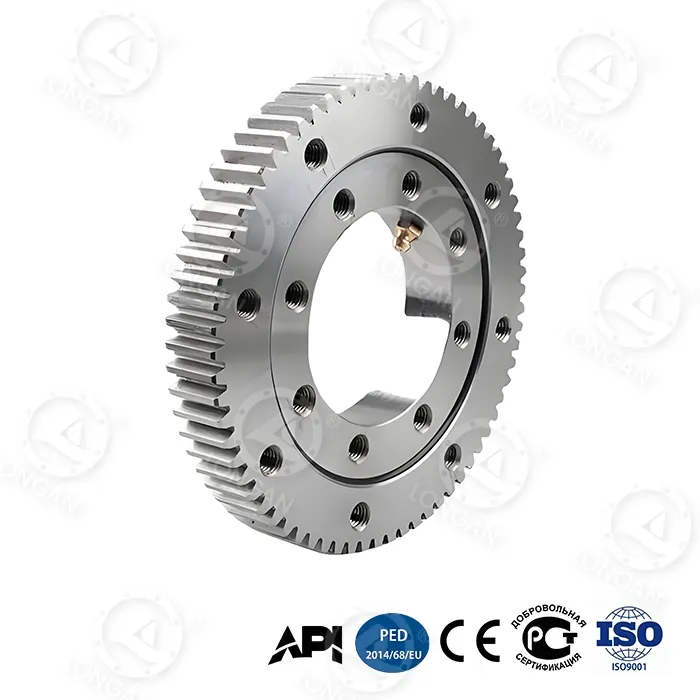
In modern crane and lifting systems, reliability, load stability, and long service life are non negotiable requirements. Engineers and procurement managers consistently look for structural components that can handle axial loads, radial forces, and overturning moments under continuous operation. This is exactly where the Slewing Ring Flange plays a critical role. Its unique structural design allows cranes to rotate smoothly while maintaining strength and alignment, even in harsh working environments.
At Wenzhou Longan Flange Co., Ltd., our experience in manufacturing precision flanges for heavy duty applications has shown us how essential proper flange design is to the overall safetyand efficiency of lifting systems. Over years of production practice, our factory has optimized materials, machining accuracy, and quality control to meet the demanding standards of global crane manufacturers. This article explains why these components are so widely used, how they work, and what technical factors truly matter when selecting them.
What Makes Slewing Ring Flanges Essential in Crane Structures?
The core function of a Slewing Ring Flange in a crane system is to connect the rotating upper structure with the stationary lower base. This connection must allow smooth rotation while safely transferring massive loads. In practice, this means the flange must handle combined forces that include axial load from the lifted weight, radial load from wind or movement, and tilting moment generated during rotation.
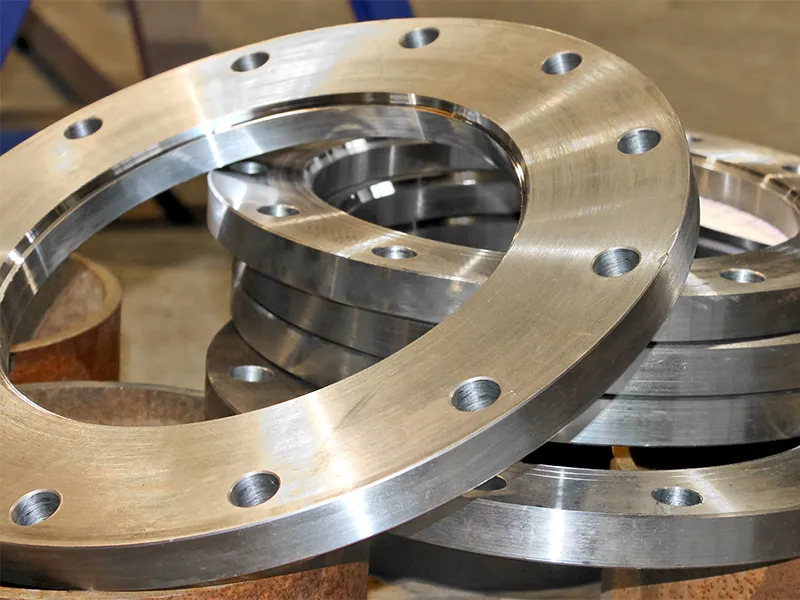
From our engineering perspective at Longan, the widespread use of this component comes from its structural efficiency. Our factory designs these flanges with optimized bolt hole distribution and precise flatness control, ensuring even stress distribution during operation. This reduces localized fatigue and extends service life.
Key structural advantages include:
High load bearing capacity due to large contact surfaces
Excellent alignment control between rotating and fixed components
Compatibility with various slewing bearing designs
Ease of installation and maintenance in large scale equipment
In crane applications, safety margins are critical. Our design philosophy focuses on redundancy and reliability. Our testing data shows that properly engineered flanges significantly reduce micro movement between mating surfaces, which is a common cause of bolt loosening over time.
Below is an example of typical technical parameters used in crane systems.
Outer Diameter
500 mm to 3500 mm
Inner Diameter
300 mm to 3000 mm
Thickness
30 mm to 120 mm
Bolt Hole Count
16 to 120
Material Grade
Carbon Steel or Alloy Steel
Surface Treatment
Machined or Anti Corrosion Coating
The adaptability of the Slewing Ring Flange is another reason for its popularity. Whether used in tower cranes, mobile cranes, or offshore lifting platforms, the same basic structural logic applies. At Wenzhou Longan Flange Co., Ltd., our team tailors each production batch to match the real operating conditions defined by our customers. Our approach ensures consistency, repeatability, and long term operational safety.
How Do Slewing Ring Flanges Support Heavy Loads and Rotational Motion?
One of the most technically demanding challenges in crane engineering is combining rotation with load bearing. The Slewing Ring Flange acts as the interface that makes this possible. It works together with slewing bearings to transmit forces while allowing controlled rotation under load.
From our factory production experience, load transfer efficiency depends heavily on machining accuracy. Our CNC processes maintain tight tolerances on flatness and parallelism, ensuring full surface contact when the flange is mounted. This is essential to prevent uneven stress and premature wear.
The load support mechanism can be explained through three main aspects:
Axial load transfer from the crane boom and payload
Radial load resistance during movement and wind exposure
Moment load absorption during rotation and braking
Each of these forces acts simultaneously. Our engineers at Wenzhou Longan Flange Co., Ltd. design flange cross sections to balance stiffness and weight. Our goal is always to provide strength without unnecessary material, which helps reduce overall system mass.
Another key factor is bolt connection reliability. Our factory applies controlled drilling and chamfering processes to ensure accurate bolt seating. Proper preload distribution across all bolts is critical for long term stability. The Slewing Ring Flange also contributes to vibration control. Smooth rotation reduces dynamic shock loads, which directly improves crane operator safety and extends component lifespan. Our field feedback confirms that cranes equipped with precision machined flanges demonstrate more stable rotational behavior under heavy loads.
At Wenzhou Longan Flange Co., Ltd., our quality inspections include dimensional checks, surface finish evaluation, and material verification. These steps ensure that our products perform consistently in demanding lifting environments. Our commitment to engineering discipline is one of the reasons this component remains a preferred choice in the industry.
Why Does Material and Manufacturing Precision Matter for Long Term Performance?
Material selection is one of the most important decisions affecting the service life of a Slewing Ring Flange. In crane systems, components are often exposed to outdoor environments, temperature variation, and cyclic loading. Our material strategy focuses on mechanical strength, toughness, and resistance to fatigue. At Wenzhou Longan Flange Co., Ltd., our factory primarily uses high quality carbon steel and alloy steel grades that meet international standards. Each batch undergoes chemical composition analysis to ensure consistency. Our experience shows that material stability directly impacts bolt retention and surface integrity over time.
Manufacturing precision is equally important. Even small deviations in flatness can cause uneven load paths. Our machining processes include:
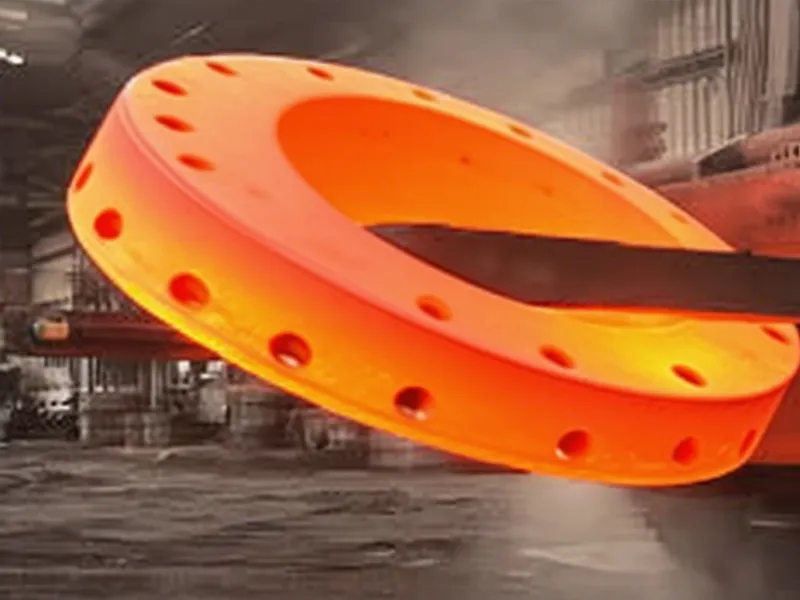
Rough machining for stress release
Heat treatment when required
Finish machining with precision equipment
Final dimensional inspection
Our factory also places strong emphasis on traceability. Each Slewing Ring Flange can be traced back to its material batch and production parameters. This level of control supports long term reliability and simplifies maintenance planning for crane operators.
Surface protection is another factor in long term performance. Depending on application requirements, our products can be supplied with protective coatings to reduce corrosion risk. This is especially important for coastal or offshore lifting systems. Through continuous improvement, Wenzhou Longan Flange Co., Ltd. has refined its production standards to align with real world crane operation demands. Our engineering driven approach ensures that each component supports safe, efficient, and durable lifting performance.
Summary
The widespread use of the Slewing Ring Flange in cranes and lifting systems is the result of proven engineering logic. Its ability to handle combined loads, support smooth rotation, and maintain structural integrity makes it indispensable in modern lifting equipment. Material quality, manufacturing precision, and proper design all contribute to its long term performance.
At Wenzhou Longan Flange Co., Ltd., our factory focuses on delivering reliable solutions that align with global crane industry expectations. Our technical expertise and production discipline allow our products to perform consistently in demanding environments. If you are evaluating components for your next lifting system project, working with a manufacturer that understands real operating conditions is essential. Contact our team today to discuss specifications, customization options, and how our experience can support your crane system requirements.
FAQ
Q1: Why are Slewing Ring Flanges critical for crane rotation systems?
They provide a stable structural interface that allows smooth rotation while safely transferring axial, radial, and moment loads generated during lifting operations.
Q2: How does flange precision affect crane safety?
High precision ensures even load distribution across bolts and contact surfaces, reducing fatigue, vibration, and the risk of structural failure over time.
Q3: What materials are commonly used for these flanges?
Carbon steel and alloy steel are commonly used due to their strength, toughness, and ability to withstand cyclic loading in heavy duty environments.
Q4:How do Slewing Ring Flanges contribute to long service life?
Proper material selection, accurate machining, and controlled surface finish minimize wear, maintain alignment, and reduce maintenance frequency.
Q5: Why should buyers focus on manufacturer capability when sourcing flanges?
A capable manufacturer ensures consistent quality, traceability, and technical support, which directly impacts crane reliability and long term operating costs.
We use cookies to offer you a better browsing experience, analyze site traffic and personalize content. By using this site, you agree to our use of cookies.
Privacy Policy