Article Summary
When buyers compare piping connection methods, the real concern is rarely the name of the fitting itself. The real concern is failure risk. Will the joint leak under pressure? Will installation take too long? Will rework increase labor costs? Will the connection remain stable in vibration-prone or compact systems? This article explains why a Socket Flange is often chosen for smaller-bore, high-pressure, and demanding service lines, and how the right product can reduce downtime, simplify alignment, and improve long-term sealing performance. Drawing on practical purchasing and application concerns, this guide also explains what to check before ordering, where this flange type works best, and how Wenzhou Longan Flange Co., Ltd. supports buyers looking for dependable piping components.
Table of Contents
Most customers do not start by asking for a flange type. They start with a problem. They may be dealing with repeated leakage, difficult pipe alignment, inconsistent weld quality, or costly shutdowns caused by small connection failures. In many plants, the weak point is not always the pipe itself, but the connection between pipe sections. When the joint is not properly selected, even a well-designed system can suffer from vibration fatigue, pressure instability, or time-consuming maintenance.
This is exactly why the Socket Flange continues to attract attention in industrial piping projects. Buyers looking for a balance between ease of assembly and dependable sealing often consider this design when working with smaller pipe sizes and service environments where accuracy matters. Instead of forcing installers to fight alignment during welding, the socket structure allows the pipe to seat into a recessed area before being fillet welded from the outside. That small structural detail can solve a surprisingly large number of field problems.
For purchasing managers, the pain point is usually cost control over time. A connection that looks inexpensive upfront may become expensive when labor, maintenance, rework, and operational interruption are counted together. For engineers, the pain point is stability under real operating conditions. For contractors, it is installation speed and consistency. A well-made Socket Flange answers all three concerns when chosen for the right application.
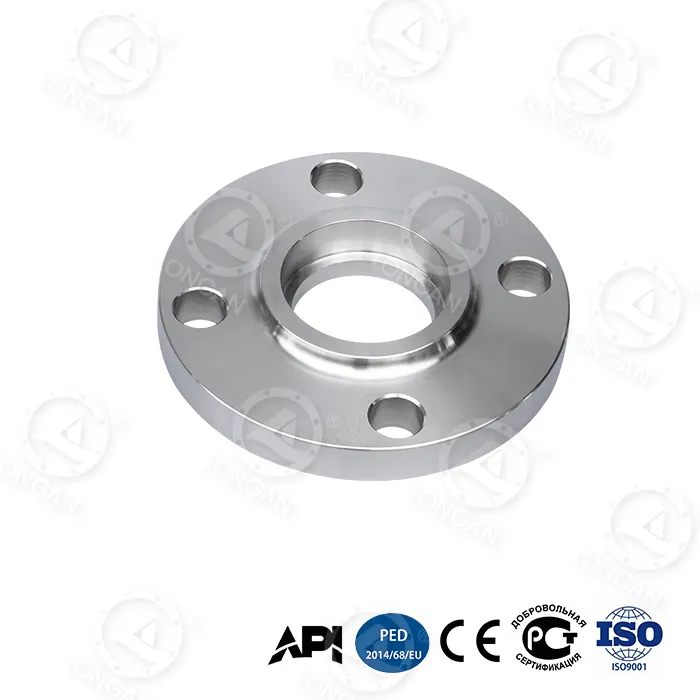
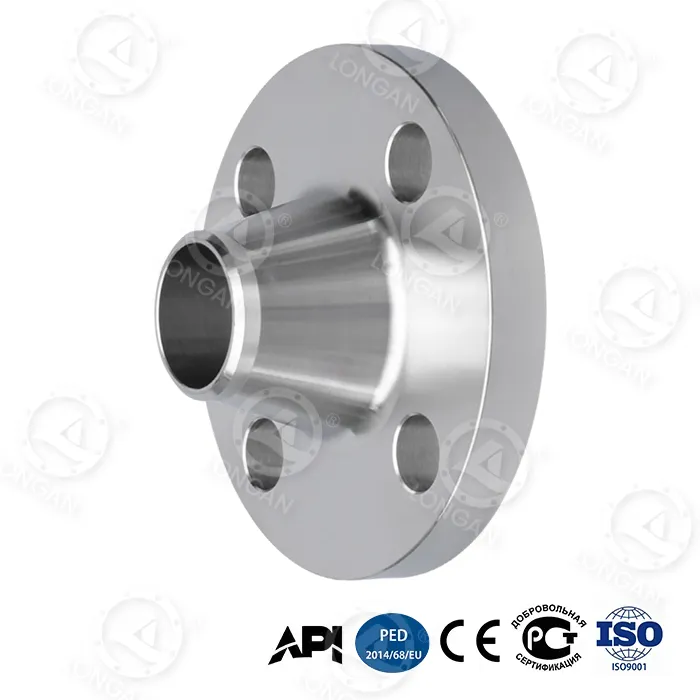
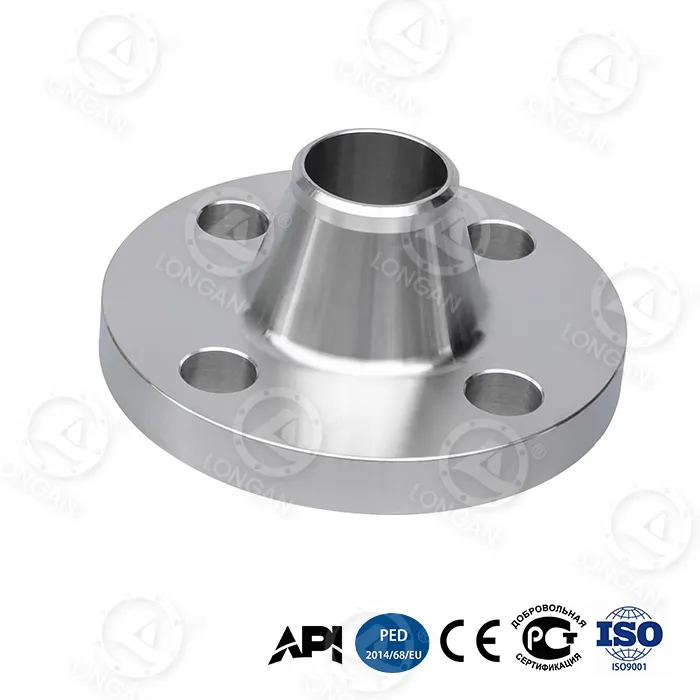
A Socket Flange is designed with a counterbored socket that allows the pipe end to be inserted into the flange before welding. Once the pipe is properly positioned with a small expansion gap, the installer applies a fillet weld around the outer joint. This design helps achieve better positioning than some alternatives, especially in smaller-diameter piping systems where clean alignment can make a big difference.
The working principle is straightforward, but its value is practical rather than theoretical. The socket supports the pipe before welding, making it easier to hold the pipe in place and maintain concentricity. That can help reduce installation errors in projects where repeated joints must be completed efficiently. Because of this, the Socket Flange is widely considered for lines handling steam, gas, oil, chemicals, and utility service where compact dimensions and reliable joints are important.
Another reason this flange type is appreciated is that it offers a more controlled fit-up during fabrication. In real workshop and on-site conditions, the easier a component is to position correctly, the more likely the final connection is to be stable. That is one reason many buyers do not treat the flange as a commodity item. They care about machining accuracy, material traceability, dimensional consistency, and surface quality because those details affect how smoothly installation proceeds.
The answer usually comes down to practical performance. A Socket Flange is often selected because it supports easier alignment, offers dependable joining for smaller piping, and helps reduce installation uncertainty. In many systems, especially where pressure matters more than very large pipe diameter, this combination is highly attractive.
There is also a purchasing advantage hidden behind the technical language. When fabrication becomes easier and more repeatable, project execution becomes easier to manage. That matters for contractors under schedule pressure and for plant owners who want fewer surprises during installation. In short, the Socket Flange is not simply a fitting; it is often a workflow decision.
| Buyer Concern | How a Socket Flange Helps | Project Value |
|---|---|---|
| Pipe misalignment | Socket design supports controlled pipe positioning | Less rework during fit-up |
| Inconsistent installation quality | Repeatable seating makes assembly easier to standardize | More stable fabrication workflow |
| Need for dependable joints in small lines | Suitable structure for compact piping systems | Improved long-term operating confidence |
| Downtime caused by poor connections | Better fit-up can support stronger overall joint quality | Lower maintenance disruption |
No flange type should be treated as universal, and that is important for buyers to remember. A Socket Flange is most commonly considered for relatively small-diameter piping where system pressure is important and where clean installation matters. It is often discussed in service lines found in petrochemical processing, power generation, industrial utilities, shipbuilding, water treatment support systems, and general mechanical piping.
It is especially useful in projects where compact routing leaves little room for sloppy assembly. In these environments, the ability to insert the pipe into the flange and then weld around the outside can simplify the job. The design is also attractive for facilities that need durable joints but want to avoid unnecessary complexity in fabrication.
That said, application suitability always depends on service conditions such as temperature, medium, code requirements, corrosion exposure, and inspection expectations. Buyers should never select purely by price or by habit. The right question is not “Is this flange popular?” but “Is this flange suitable for how my system actually runs?”
Many purchasing problems begin long before delivery. They begin when buyers approve a product without checking the details that affect compatibility and durability. If you are sourcing a Socket Flange, the following points deserve close attention.
A dependable supplier should be able to explain these points clearly, not just quote a price. That is one reason buyers work with established manufacturers such as Wenzhou Longan Flange Co., Ltd. A capable partner understands that industrial sourcing is not only about shipping metal parts. It is about supplying connection components that fit the application, arrive consistently, and help the buyer avoid operational headaches after installation.
Even a high-quality Socket Flange can underperform if it is installed carelessly. Buyers sometimes focus heavily on product selection and then underestimate the role of field workmanship. In reality, installation discipline directly affects sealing reliability and service life.
The pipe should be inserted correctly, but not forced without allowing the appropriate gap for thermal expansion considerations during welding. Weld quality should be controlled carefully, and the installer should follow suitable procedures for the material and service requirements. Clean preparation matters as well. Dirt, burrs, poor fit-up, and rushed welding can turn a good component into a poor joint.
This is why experienced buyers often look for a supplier that does more than manufacture. They value technical communication. When the supplier can provide dimensional clarity, practical guidance, and consistent machining, the installation team has a better chance of getting the connection right the first time.
Buyers often compare the Socket Flange with slip-on and threaded options. Each has its place, and the best choice depends on service demands rather than habit.
| Flange Type | Typical Strength | Typical Buyer Consideration |
|---|---|---|
| Socket Flange | Controlled pipe seating and practical alignment for smaller piping | Useful when stable fit-up and reliable welding matter |
| Slip-On Flange | Common and familiar in many general applications | May be chosen for convenience, depending on design and service conditions |
| Threaded Flange | No welding required in certain systems | Can be attractive where welding is difficult or undesirable |
The real takeaway is that the Socket Flange tends to appeal to buyers who want a more guided fit-up than a basic slide-on connection can offer, while still keeping fabrication practical. It is not automatically better in every scenario, but in the right setting, it is often the more reassuring choice.
A strong product design still depends on manufacturing quality. Buyers who have dealt with dimensional inconsistency, poor machining, late delivery, or vague paperwork already know this. A flange supplier should be judged not only by catalog range, but by responsiveness, production discipline, and the ability to understand real project requirements.
Wenzhou Longan Flange Co., Ltd. is a name many buyers will encounter when searching for flange solutions, and that is where supplier evaluation should become more practical. Can the manufacturer communicate clearly? Can it support standard and customized needs? Can it provide stable quality across repeated orders? Can it help reduce sourcing risk rather than adding to it? These are the questions that matter in real procurement.
When buyers choose a Socket Flange, they are not only selecting a part. They are choosing the reliability of a connection, the efficiency of installation, and the confidence of future operation. That is why serious sourcing decisions should always combine technical suitability with supplier credibility.
Q1: What is the main advantage of a Socket Flange?
The main advantage of a Socket Flange is that it allows the pipe to be seated into a recessed socket before welding, which helps improve positioning and supports a more controlled assembly process in smaller piping systems.
Q2: Is a Socket Flange suitable for high-pressure service?
It is often considered for smaller-bore piping in demanding service conditions, but the final decision should always depend on design code requirements, material selection, pressure class, and actual operating conditions.
Q3: What should buyers confirm before ordering?
Buyers should confirm material grade, pressure rating, dimensions, standards, sealing face details, documentation, and whether the supplier can maintain consistent machining quality across the full order.
Q4: Why does installation quality matter so much?
Even a well-made Socket Flange can fail if fit-up, welding, or preparation is poor. Correct installation helps preserve the performance that the product is designed to deliver.
Q5: How do I know if this flange type is right for my project?
You should evaluate pipe size, medium, pressure, temperature, corrosion exposure, maintenance expectations, and the installation environment. A capable supplier can help you review these points before production begins.
If you are looking for a Socket Flange that supports reliable installation, consistent quality, and practical project performance, Wenzhou Longan Flange Co., Ltd. is ready to help. Contact us today to discuss your specifications, request a quotation, and find the right flange solution for your next piping project.
TradeManager
Skype
VKontakte